

Walt Murphy’s News and Results Service ([email protected])
This Day in Track & Field–August 17
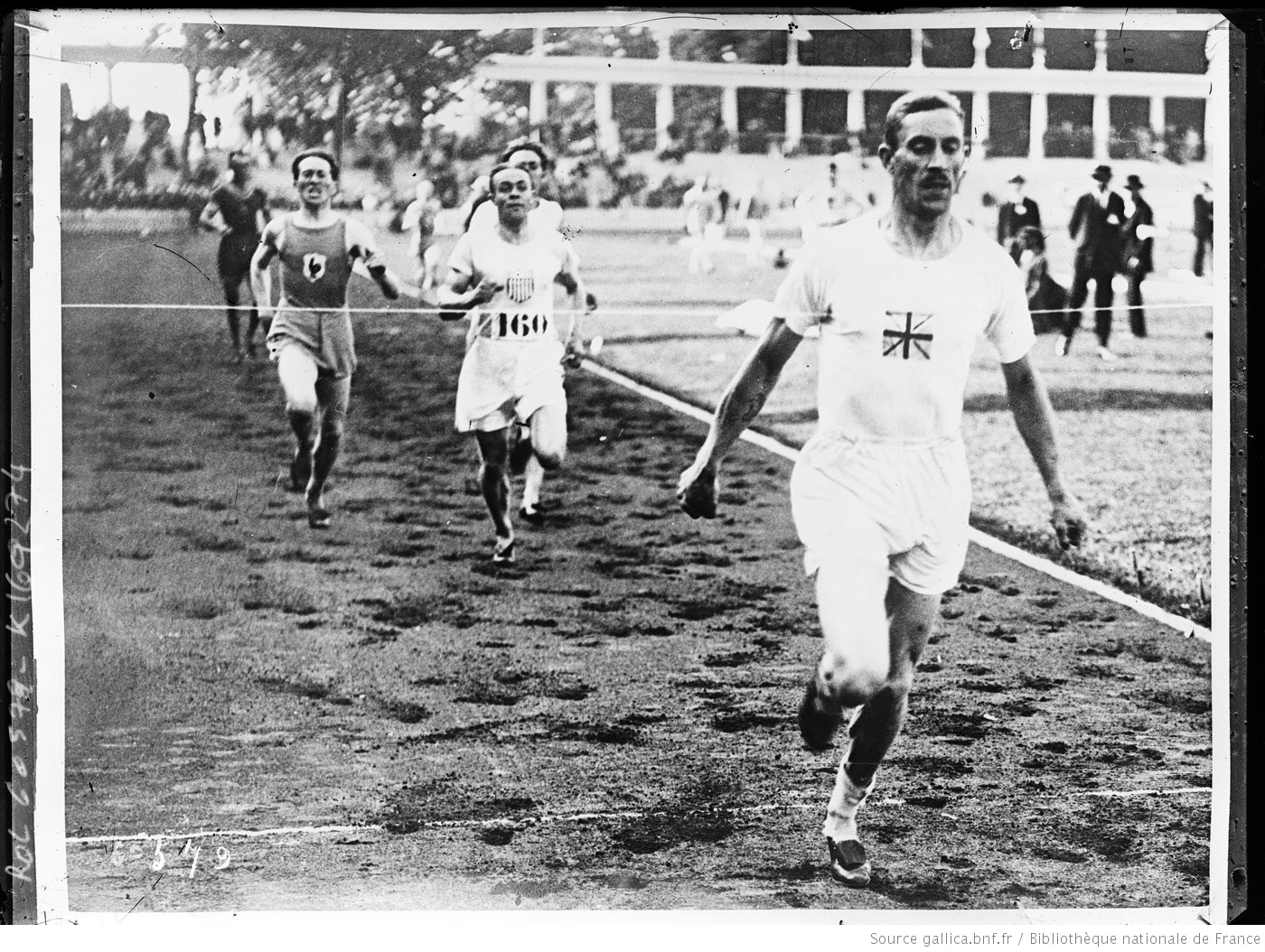
1920—Britain’s Albert Hill (1:53.4) came from behind in the homestretch to win the 800-meters at the Antwerp Olympics. Close behind were American Earl Eby (1:53.6), South Africa’s Bevil Rudd(1:53.6), and Great Britain’s Edgar Mountain (1:53.7).
31 at the time, Hill remains the oldest Olympic gold medalist in the event. He would win a 2nd gold in the 1500 two days later.
France’s Joseph Guillemot passed Finland’s Paavo Nurmi (15:00.00) with 200-meters to go in the 5000-meters, and won going away in 14:55.6. 3rd was Sweden’s Eric Backman (15:13.0).
The U.S. got a 1-2 finish in the Men’s High Jump from Dick Landon (6-4 3/8 [1.936]) and Harold Muller (6-2 ¾ [1.90]). 3rd was Sweden’s Bo Eklund (6-2 ¾ [1.90]).
Medalists/Results: https://en.wikipedia.org/wiki/Athletics_at_the_1920_Summer_Olympics
Olympedia Reports: https://www.olympedia.org/editions/7/sports/ATH
1977–A German foursome of Thomas Wessinghage (3:38.8), Harald Hudak (3:39.1), Michael Lederer (3:44.6), and Karl Fleschen (3:36.3) ran 14:38.8 in Cologne to set a World Record in the 4×1500 relay. The record lasted for 32 years until a team from Kenya ran 14:36.23 in 2009.
1983—Tyke Peacock jumped 7-7 ¾ (2.33) in Berlin to break the American Record of 7-7 ¼ (2.32) that he had shared with Dwight Stones, Jeff Woodard, and Del Davis.
Another American Record was set by Henry Marsh in the Steeplechase (8:12.37).
Sports Illustrated Vault: https://vault.si.com/vault/1983/08/29/above-and-beyond-the-call-of-duty
1985–Four of Ireland’s greatest milers combined to set the current World Record of 15:49.08 in the 4-mile relay at Dublin’s Belfield Stadium. And guess who had the slowest split?
Eamonn Coghlan, pushed by the “B” team’s John Treacy the entire way, led off in 4:00.2, followed by Marcus O’Sullivan (3:55.3), Frank O’Mara (3:56.6), and Ray Flynn (3:57.0). The previous mark of 15:59.57 was set by a John Walker-led New Zealand team in 1983.
The reluctant foursome had to be coaxed by Irish journalist John O’Shea, the founder of the international humanitarian agency GOAL, into competing in the fund-raising event. O’Sullivan, O’Mara, and Flynn were in the middle of the European track season, and Coghlan was still recovering from an injury. In fact, Coghlan, as well as his three eventual teammates, didn’t think the record was possible with him on the team, since he was far from being in top shape.
“I know even I was pushing not to have Coghlan on the team,” said Flynn. “A week or so before we’d raced together in a road mile over in Minneapolis, and Eamonn had run 4:22. So he was really in bad shape. Terrible shape. The other guys mightn’t admit to it, but we were all trying to push him off our team. We just didn’t think we’d break the record with him on board.”
“But Eamonn was such a competitor that he was able to produce that mile almost naturally, even in his worst possible condition, helped by the fact that John Treacy was on the B-team and chasing him down. Now I’m so happy that he was part of it, and gave the whole thing so much more credibility.”
Coghlan fought the hardest not to be included on the team. “I remember John (O’Shea) getting on to me about running and I told him no way, that I hadn’t done a track session in six months because of injury. I knew I was in no shape to run the mile and just the night before we had a real blow-out over it. I think he actually called me a waster. That’s how mad we both were.”
“Then that morning (fellow ex-Villanovan) Noel Carroll called up, partly to apologize for John. Somehow, he managed to convince me to give it a go and I ended up winning the first leg bang on four minutes. Noel always claimed after that it was the best mile I ever ran.”
“We were all leaving and saying to each other ‘that was great wasn’t it?’ I came away from it feeling just so high,” said O’Sullivan, “and I suppose in many ways it was the quintessential evening of what we were all about at that time”.
“We left feeling as high as a kite and feeing that this was what it was all about. We always got along well, all of us, the Irish athletes and I think we all at least gave the appearance we were enjoying what we were doing, that money wasn’t the end all of why we were in it and that evening summed it up I think. It was a kind of a benchmark in our lives to what an evening should be, an event.”
“There was nothing on the line that night and yet if I had to name five memorable races that would be right up there. It was just so energetic and full of life, full of everything.”
https://www.irishecho.com/2020/10/legendary-irish-milers-to-run-again
Video(includes post-race interview): http://www.youtube.com/watch?v=IpnFS62KVlM
GOAL: http://www.goal.ie/
1988–Butch Reynolds ran 43.29 in Zürich to smash Lee Evans’ 20 year old World Record in the 400-meters (43.86). Reynolds had come close with his 43.93 win at the U.S. Olympic Trials in July, but needed a pre-race pep talk from his brother Jeff to be convinced he could get the record in his final major race before the Seoul Olympics.
Reynolds, running in lane 4, keyed off Nigeria’s Innocent Egbunike, who ran a scorching 200 from lane 5. Egbunike started paying for his fast pace, but Reynolds was still going strong and was right on Evans’ record pace as he passed 300-meters. With his brother Jeff, who had run 45.54 in the “B” race, cheering him on, the powerful Reynolds (6-2 3/4, 176) stormed down the final straightaway to finish off his record run.
Following Reynold across the line were Danny Everett (44.20), Steve Lewis (44.26), Andrew Valmon (44.55), Cuba’s Roberto Hernández (44.94), Egbunike (44.97), and Antonio McKay (45.10).
Carl Lewis won the Men’s 100 in 9.93, but no one knew at the time that he had equaled his own World Record, since Ben Johnson’s mark of 9.83, set at the 1987 World Championships, as well as his subsequent time of 9.79 that he would run at the Seoul Olympics later in 1988, hadn’t yet been stricken from the record books. When they finally were (after his admission of drug use), the WR reverted to Lewis’ 9.93 from the ’87 Worlds!
Video: http://www.youtube.com/watch?v=0y30DFZ6cSg
Reynolds Looks Back:
T&F News Cover(October):
https://trackandfieldnews.com/wp-content/uploads/2019/12/1988_10.jpg
1993–Michael Johnson won the first of his four World Championship titles in the 400-meters, beating teammate (and World Record holder) Butch Reynolds in Stuttgart, 43.65-44.13. The U.S. might have had a sweep, but Quincy Watts, the 1992 Olympic gold medalist, had to settle for 4th after the sole of his left shoe broke away during the race! Samson Kitur (44.54), one of 3 Kenyans in the final(!), won the bronze medal.
There was a sweep of sorts for the U.S. in the Women’s 400, with Jearl Miles(Clark) winning the race in 49.82, with Natasha Kaiser-Brown winning the silver medal (50.17). 3rd was Jamaica’s Sandie Richards (50.44).
German fans were treated to a great battle in the 2-day Heptathlon. Their own Sabine Braun, the defending champion, was giving 1987 World Champion (and 1988 Olympic gold medalist) Jackie Joyner-Kersee (who pulled up in the 200 at the 1991 Worlds) all she could handle, and the outcome wasn’t decided until the final event, the 800-meters.
JJK wasn’t happy with the way she had been competing, but she came through in the end, beating Braun, who led by 7 points after six events, by 3.33 seconds (2:14.49-2:17.82) to give her a 40-point margin of victory.
Her winning total of 6,837 points (6,797 for Braun) was one of the lowest of her brilliant career, but she told T&F News, “I have to say this definitely is my greatest triumph…I’ve enjoyed all my major wins, but I enjoyed this one most because of the situation I put myself in. I really had to put it all together”. Winning the bronze medal was Belarus’s Svetlana Buraga (6635).
After American Meredith Rainey set a face pace of 55.49 through the first 400-meters, Mozambique’s Maria Mutola went on to win the first of her three World titles in the Women’s 800-meters (1:55.43). 2nd & 3rd were Russia’s Lyubov Gurina (1:57.10) and Romania’s Ella Kovacs (1:57.92). Rainey wound up in 5th place (1:59.57).
Germany’s Lars Reidel won the 2nd of his four straight World titles in the Men’s Discus with a throw of 222-2 (67.72). Teammate Jürgen Schult, the 1987 champ and World Record holder, finished 3rd (216-11 [66.12]) behind Russia’s Dmitriy Shevchenko (219-6 [66.90]).
Kenya’s Paul Ruto (1:44.72) won the Men’s 800-meters over Italy’s Giuseppe D’Urso (1:44.86) and fellow Kenyan Billy Konchellah (1:44.89), the 2-time defending champion.
Medalists/Results: http://en.wikipedia.org/wiki/1993_World_Championships_in_Athletics
Videos: W800 M400 MDT W400 M800
2008–Shelly-Ann Fraser (-Pryce/10.78) led Jamaica to the first-ever Olympic sweep in the Women’s 100-meters, with teammates Sherone Simpson and Kerron Stewart finishing in a dead-heat for 2nd place (10.98 for both). 4th was American Lauryn Williams (11.03), whose streak of three Championship medals in a row came to an end (2004 OG-silver, 2005 Worlds-gold, 2007 Worlds-silver).
Ethiopia’s Kenenisa Bekele won the Men’s 10,000-meters in 27:01.17 and would later win the 5000 (12:57.82). Finishing 6th in the longer race was the man he replaced as the world’s greatest distance runner, teammate Haile Gebrselassie (27:06.68), a 2-time Olympic and 4-time World champion in the event. Winning silver and bronze were Ethiopia’s Sileshi Sihine (27:02.77) and Kenya’s Micah Kogo (27:04.11).
Russia’s Gulnara Galkina won the inaugural Olympic Women’s Steeplechase in the World Record time of 8:58.81. Kenya’s Eunice Jepkorir (9:07.41) and Russia’s Tatyana Arkhipova (9:12.33), Finishing 9th was Jenny Barringer (Simpson), who set an American Record of 9:22.26.
Medalists in the Men’s Hammer were Slovenia’s Primož Kozmus (269-1 [82.02]) and the Belarus duo of Vadzim Dzeviatouski (267-9 [81.61]) and Ivan Tsikhan (267-5 [81.51]), both of whom were originally disqualified for doping violations, but were later reinstated by the Court of Arbitration for Sport.
Medalists/Results: https://en.wikipedia.org/wiki/Athletics_at_the_2008_Summer_Olympics
Videos: W100 M10k(no audio) Complete Race WSC(no audio) MHT
2009–With the World Championships in Berlin following the same exact daily schedule as the 2008 Olympics, Jamaica’s Shelly-Ann Fraser(-Pryce) celebrated the first anniversary of her win in Beijing by taking the gold medal in the Women’s 100 here over teammate Kerron Stewart (10.73-10.75). For the 2nd Worlds in a row, Carmelita Jeter (10.90) won the bronze medal, while defending champion Veronica Campbell-Brown (10.95) finished 4th, and 2005 Champion Lauryn Williams (11.01) was 5th.
The Women’s Pole Vault provided one of the biggest shocks in Berlin as World Record holder Yelena Isinbaeva no-heighted, opening the door for Poland ‘s Anna Rogowska to win the gold medal with a clearance of 15-7 (4.75). American Chelsea Johnson provided another surprise as she tied for 2nd with Rogowska’s teammate, Monika Pyrek, with both clearing 15-3 (4.65). Cheering for his daughter in Berlin was Jan Johnson, who won the bronze medal in the Men’s Vault at the 1972 Olympics in Munich.
The medalists in the Women’s Steeplechase were Russia’s Yuliya Zarudneva (9:08.39), Kenya’s Milcah Chemos (9:08.57), and Russia’s Gulnara Galkina (9:11.09), the 2008 Olympic gold medalist. Spain’s Marta Domínguez (9:07.32) was the original winner, but was later disqualified for a doping violation. Colorado’s Jenny Barringer (Simpson) finished 5th and lowered her American Record to 9:12.50 (since broken).
Kenenisa Bekele got the first half of his distance double by winning the Men’s 10,000 in the Championship Record time of 26:36.31. He would later win the 5000 in 13:17.09. Winning silver and bronze were Eritrea’s Zersenay Tadese (26:50.12) and Kenya’s Moses Masai (26:57.39).
Cuba’s Yargelis Savigne (49-3/4 [14.95]) and Mabel Gay (47-11 ¼ [14.61]) finished 1-2 in the Women’s Triple Jump, with Russia’s Anna Pyatykh (47-10 [14.58]) taking 3rd.
Medalists/Results: https://en.wikipedia.org/wiki/2009_World_Championships_in_Athletics
IAAF Coverage Additional Reports
2013—Usain Bolt (19.66), who had earlier won the 100, continued his dominance of the sprints, winning the Men’s 200-meters at the World Championships in Moscow. It was the 9th individual World/Olympic title for Bolt in the 100/200. 2nd in the 200 was Jamaican teammate Warren Weir (19.79-PR) and 3rd was American Curtis Mitchell (20.04)
Brianna Rollins(McNeal), who had already run 40 sprint and hurdles races before arriving in Moscow, overcame a poor start to win the 100-meter hurdles in 12.44. Rollins had earlier won the NCAA title and set an American Record of 12.26 while winning at the U.S. Championships. 2nd was Australia’s Sally Pearson (12.50), the defending champion, who had battled hamstring injuries all season. The bronze medal went to Great Britain’s Tiffany (Ofili) Porter (12.55), who edged Dawn Harper (12.59), the 2008 Olympic Champion. Porter was a 5-time NCAA Champion while at Michigan (3-outdoor, 2-indoor).
Clean through 6-6 ¾ (2.00), American Brigetta Barrett was leading in the Women’s High Jump over Russia’s Svetlana Shkolina, who had one miss at 6-4(1.93). Barrett, who had won her 3rd NCAA title (Arizona) in June, missed her first attempt at 6-8 (2.03), while the unheralded Shkolina, getting loud support from the partisan crowd (which was also cheering for their women’s 4×400 team), cleared cleanly on her first effort. The gold medal was hers after Barrett missed on her two remaining jumps. Russia’s Anna Chicherova (6-5 ½ [1.97]), the gold medalist at the 2011 Worlds and 2012 Olympics, had to settle for bronze here. (Along with Spain’s Ruth Beitia).
Ethiopia’s Meseret Defar (14:50.19) sprinted 59.8 for her final 400-meters to win the Women’s 5000 over Kenya’s Mercy Cherono (14:51.22) and Ethiopia’s Almaz Ayana (14:51.33). Americans Molly Huddle (15:05.79) and Shannon Rowbury (15:06.10) finished 5th and 6th.
Running without the injured Allyson Felix and the absent Sanya Richards-Ross, both of whom had run on the winning teams at the last three World Championships and the last two Olympics, the U.S. still had a chance to win the Women’s 4×400, but anchor Francena McCorory (49.3) fell just short of catching Russia’s Antonina Krivoshapka, with the host country apparently winning this event for the first time since 1999 (3:20.19-3:20.41).
However, the U.S. streak remained intact after a re-test of Krivoshakpa’s urine sample from the 2012 Olympics was positive, leading to the disqualification of Russia’s 4×400 from the London Olympics (they finished 2nd) and these World Championships. Moving up to the silver and bronze positions were Great Britain (3:22.61) and France (3:24.21).
Medalists/Results IAAF Coverage Additional Reports
Videos: M200 W100h W5000(finish) W4x400
…