

Lyles and Jefferson-Wooden Redraw the Boundaries of the 200m
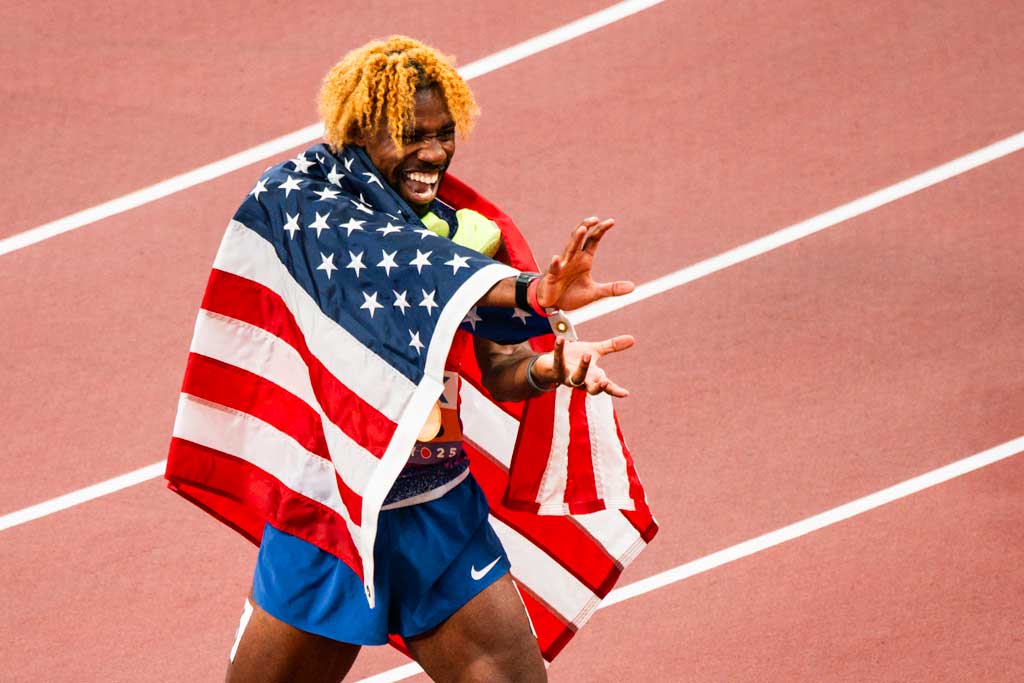
Noah Lyles has spent much of his career chasing ghosts, real and imagined. In Tokyo three years ago, those ghosts nearly swallowed him. The Olympic stage that was meant to showcase his flair instead left him grappling with depression, self-doubt, and a lonely bronze medal in the 200 meters. At the World Championships, inside the same Japan National Stadium, he left those memories behind in the most emphatic way possible.
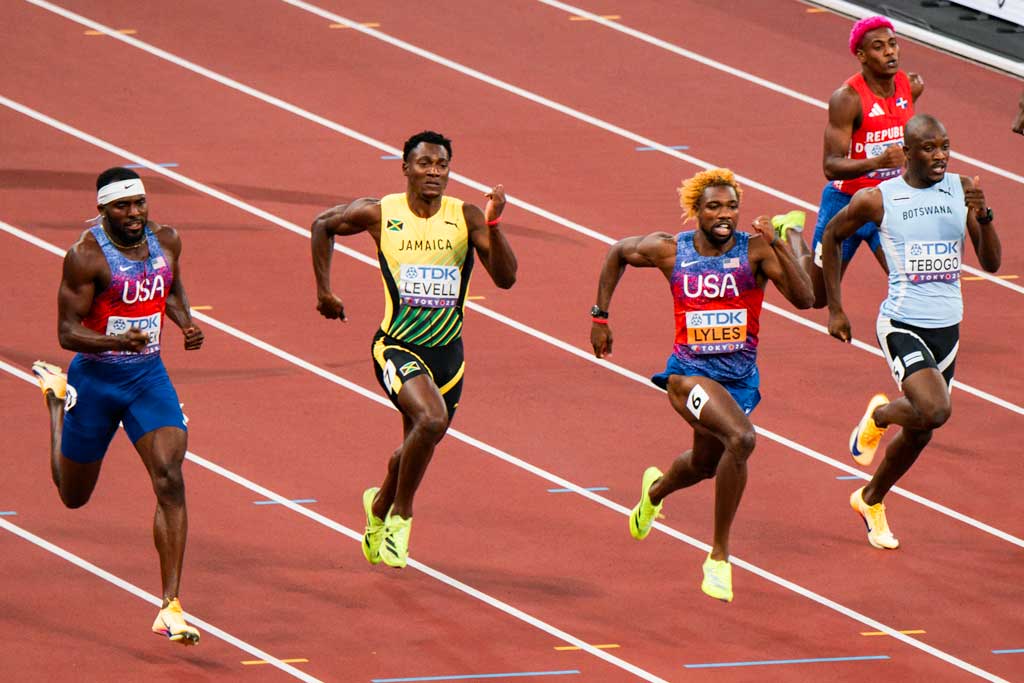
He surged through the final 40 meters with his trademark drive, stopping the clock at 19.52 and claiming a fourth straight world title in his signature event. The victory tied Usain Bolt’s record in the 200 and marked another step in a career that is beginning to shift how track and field measures greatness.
Lyles has now won every global 200m final since 2019. His average finishing times across those races rival, and in some respects surpass, Bolt’s own. While the Jamaican still looms over the sport as the last true global superstar, Lyles is assembling a body of work that forces a reevaluation. Bolt had lightning. Lyles offers consistency, charisma, and a will to turn disappointment into fuel.
“This is amazing and such a joyous moment,” he said after the race, his blond locks bouncing in the flashbulbs. “In 2021 I was depressed, but this time I am energised. I love what I do, and I am happy.”
What sets Lyles apart is not only the victories but the context in which they arrive. He weathered the shadow of mental health struggles, a pandemic that robbed him of his stage, and an Olympic defeat that lingered longer than he liked. Each year since, he has returned sharper. He doubled in Budapest, claiming the 100 and 200 two years ago. He endured a Covid-hit final in Paris, leaving the 200m to Letsile Tebogo, but even that setback could not halt his momentum.
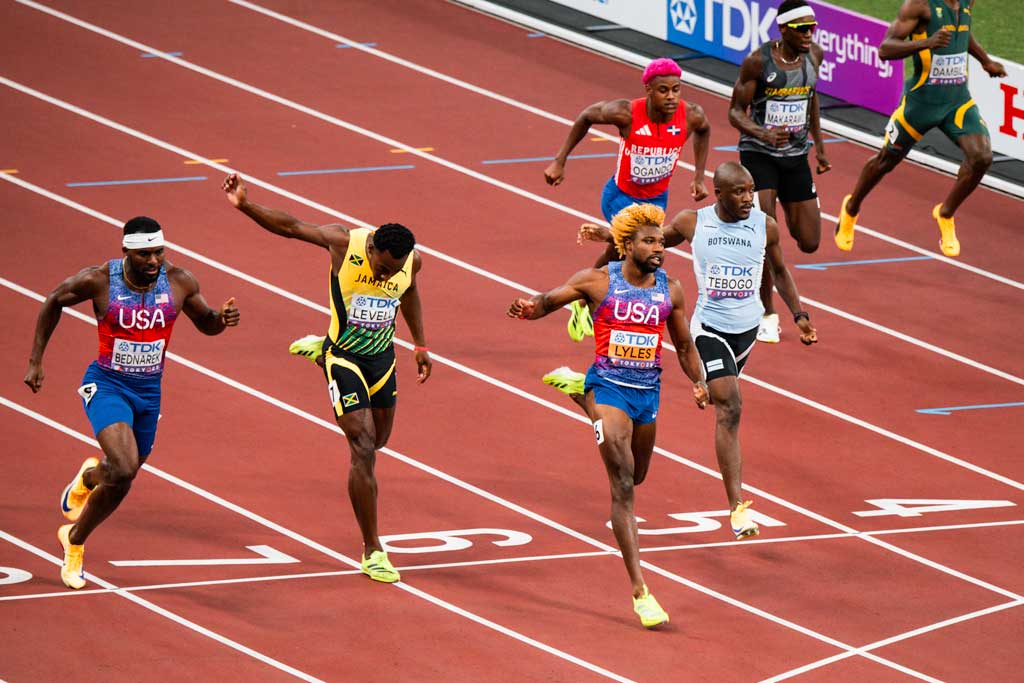
The finish of the final showed how narrow the margins can be. Kenny Bednarek, his countryman and rival, was a fraction behind in silver. Bryan Levell of Jamaica ran a personal best at 21 years old for bronze, with Tebogo missing out by one-hundredth of a second. For the first time in championship history, four men broke 19.70 in the same race, a statistical marker of how intense the event has become. Yet amid the depth, Lyles kept his head, leaned forward, and extended his streak.
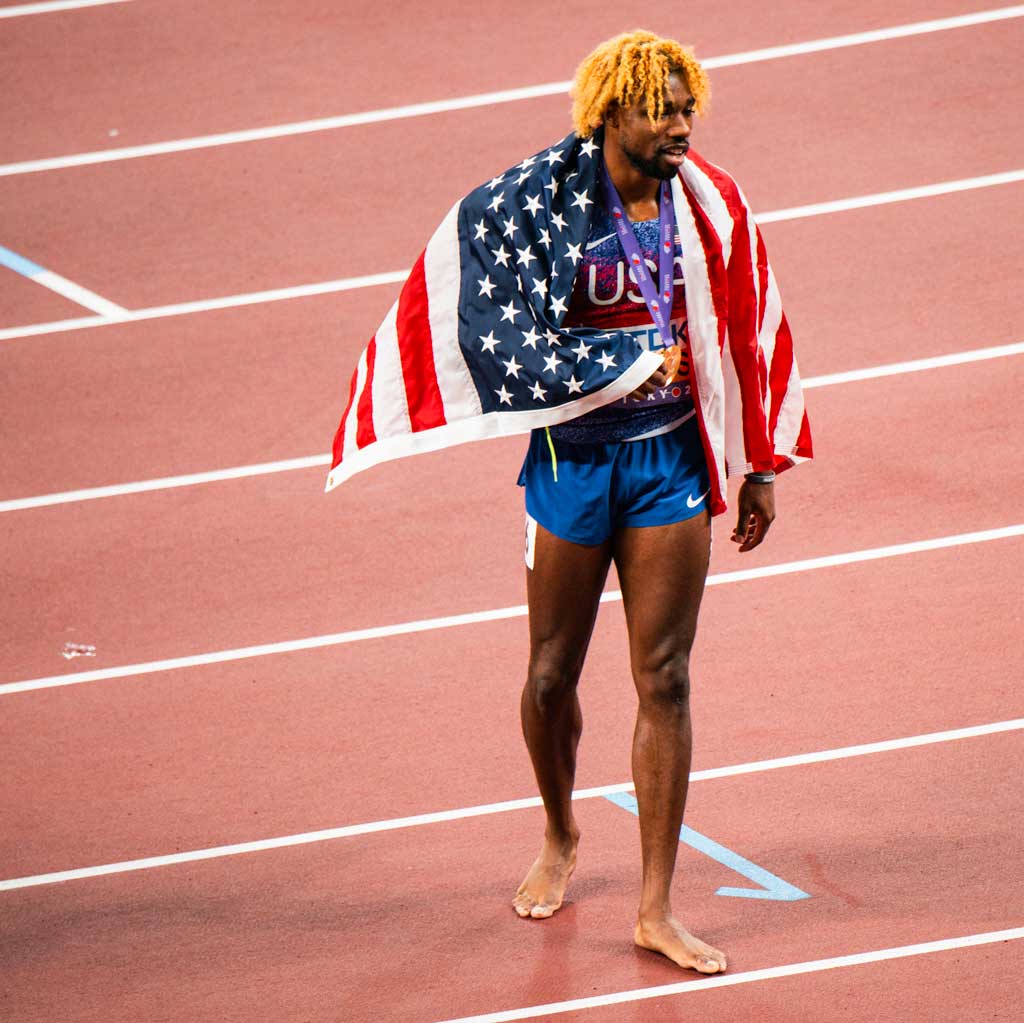
The conversation now turns to Beijing 2027 and Los Angeles 2028. Lyles spoke openly about wanting to become the only man with five world 200-meter titles. If he can also add an Olympic crown in Los Angeles, in front of a home crowd, the balance between him and Bolt begins to shift more dramatically. Bolt’s aura may never fade, but Lyles is shaping a resume that belongs in the same breath, and perhaps even higher in terms of longevity and averages.
While Lyles reasserted himself, another American sprinter authored a chapter of her own. Melissa Jefferson-Wooden completed a sprint double in Tokyo, claiming the 100 earlier in the week and the 200m on Friday. In doing so, she became the first U.S. woman to achieve the feat and only the fourth overall in championship history.
Her 200m victory was a show of command. She crossed the line in 21.68, nearly half a second ahead of her nearest rival, a margin rarely seen at this level. Only Allyson Felix in 2007 has won a world 200 by more. The result pushed Jefferson-Wooden past Felix on the all-time list, placing her eighth. At 24 years old, she now carries ambitions not only of collecting medals but also of pressing toward Florence Griffith-Joyner’s long-standing world record.
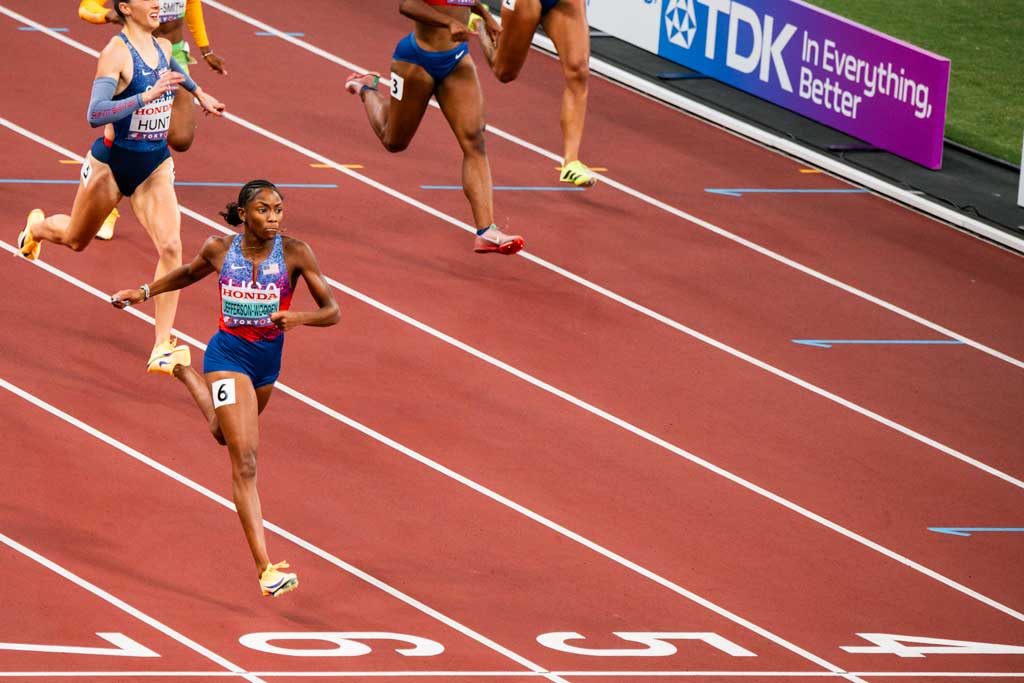
“It feels amazing to win the double,” she said. “Growing up I looked up to Allyson. To hear these statistics makes me grateful for the position I am in now.”
Her path has not been straightforward. In her first professional season, she failed to make a national team. Instead of fading, she regrouped, made an Olympic squad, and has climbed to the top of the sport. What she displayed in Tokyo was not only raw speed but the ability to back up her form at the U.S. trials with delivery on the global stage.
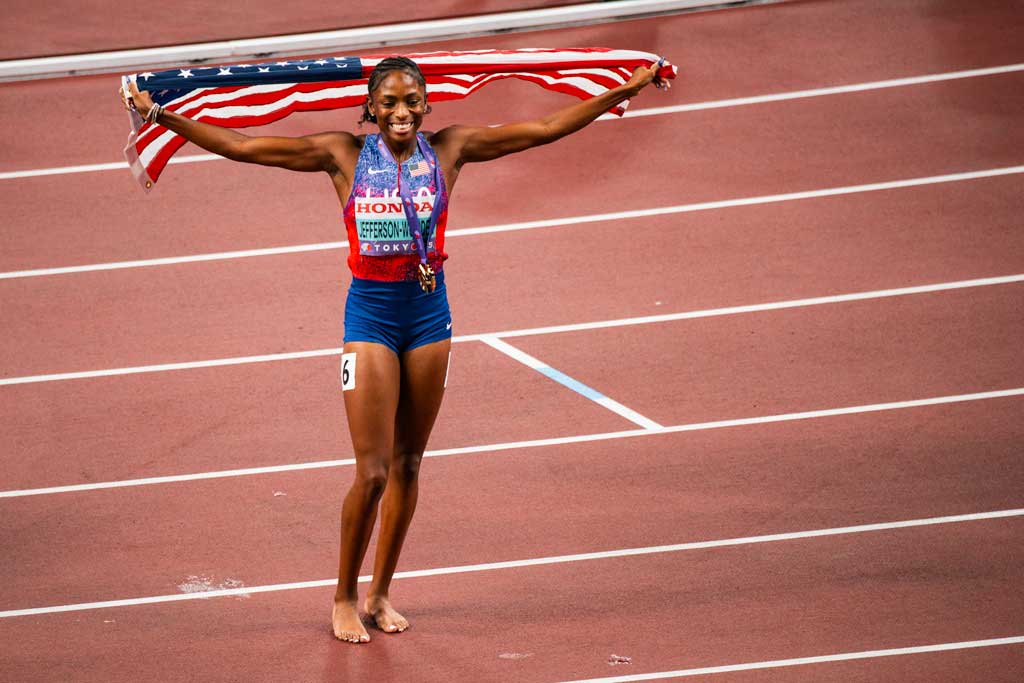
Where does this leave her among the pantheon of American sprinters? Felix remains the standard in versatility and longevity. Marion Jones, despite her legacy being tarnished, once set a bar for dominance. Shelly-Ann Fraser-Pryce, from Jamaica, achieved the double in 2013. Now Jefferson-Wooden joins that select club, and in doing so she has placed herself firmly in the conversation of the next great figure in women’s sprinting.

Amy Hunt of Britain took a surprise silver, Shericka Jackson a bronze, but this night belonged to Jefferson-Wooden. The sight of her sitting on the track afterward, smiling through disbelief, was one of the enduring images of these championships.
Together, Lyles and Jefferson-Wooden represent a changing of the guard. American sprinting, once searching for heirs to Bolt and Felix, may have found its standard bearers. Both are young enough to shape the next Olympic cycle. Both carry ambitions that extend beyond medals, into records and legacies.