
Walt Murphy’s News and Results Service ([email protected])
This Day in Track & Field–September 1
1904—The winner of the 56lb Weight Throw at the St.Louis Olympics was Canadian Étienne Desmarteau (34-4 1/8 [10.465]), the only non-American to medal in the day’s 5 finals. 2nd and 3rd were John Flanagan (33-4 [10.16]) and James Mitchel
(33-3 1/8 [10.135]).
An all-U.S. final in the 200m-Hurdles saw the medals go to Harry Hillman (24.6), Frank Castleman (24.8), and George Poage (nt). It was the third gold medal of the Games for Hillman, who had earlier won the 400m and the 400m-Hurdles.
Other medalists:
Men’s 800-Meters: 1.James Lightbody (1:56.0), 2.Howard Valentine (1:56.3-estimated), Emil Breitkreutz (1:56.4e)
Long Jump:1.Myer Prinstein (24-1 [7.34]), 2.Daniel Frank (22-7 ¼ [6.89]), 3.Robert Stangland (22-6 ¾ [6.88])
Triple Jump: A 2nd gold medal for Prinstein, who passed Fred Englehardt (45-7 ¼ [13.90]) in the last round with his
winning jump of 47-1 (14.35). Stangland won a 2nd bronze medal with a leap of 43-10 (13.36).
1960–One New York newspaper characterized this day as “Black Thursday” because of the disappointing performance of the U.S. team at the Rome Olympics.
19-year old John Thomas, who set a World Record of 7-3 ¾ (2.22m) at the U.S. Trials, was the heavy favorite to win the gold medal in the Men’s High Jump, but he had to settle for the bronze (7-1/4 [2.14]) behind Soviets Robert Shavlakadze and a young (18) Valeriy Brumel (both cleared 7-1 ½ [2.187]).
Germany’s Armin Hary edged American Dave Sime for the gold in the Men’s 100 (10.32-10.35), while favored Ray Norton finished dead last (6th). Great Britain’s Peter Radford won the bronze medal (10.3).
But the biggest shock of all, at least to the Murphy family, came in the Men’s 800-meters. It was a long time ago, but I remember this moment as if it happened yesterday. My senior year of high school was about to start, and I was returning home to my apartment building in Brooklyn after running an errand. My mother was talking to a neighbor and she was holding the afternoon edition of the NY World-Telegram and Sun, which had just been delivered.
Hoping there might be a late report from Rome, I grabbed the paper and turned quickly to the sports section. And there it was, breaking news in bold print at the bottom of the day’s regular story–”Brooklyn’s Tom Murphy eliminated in the semi-finals of the Men’s 800”. After riding a wave of excitement as I followed my cousin’s successful elite career from 1958 through the 1960 Olympic Trials, this was a crushing blow, and I quietly made my way up the stairs to our 4th-floor apartment.
Tom and his coach, Manhattan College’s George Eastment, were under the impression that there would only be three rounds in the 800, and they planned their training accordingly. When they arrived in Rome, however, they were shocked to find out there would be four rounds, a move necessitated by the large number of entries. Not an ideal setup for a runner like Tom, who was more of a 1/4-mile/1/2-mile type.
With his father and uncle watching from the stands, Tom won his first two races the day before (that’s right—two prelims in one day!), but was never in good position in his semi-final and wound up last in 1:48.2. When teammates Jerry Siebert and Ernie Cunliffe were eliminated in the second semi-final, it left the U.S. without a finalist in the event for the first time in Olympic history. Sadly, Tom passed away in June (2025) at the age of 89.
Soviet Irina Press won the 80m-hurdles in 10.8, followed by Great Britain’s Carole Quinton (10.9) and East Germany’s Gisela Köhler (11.0).
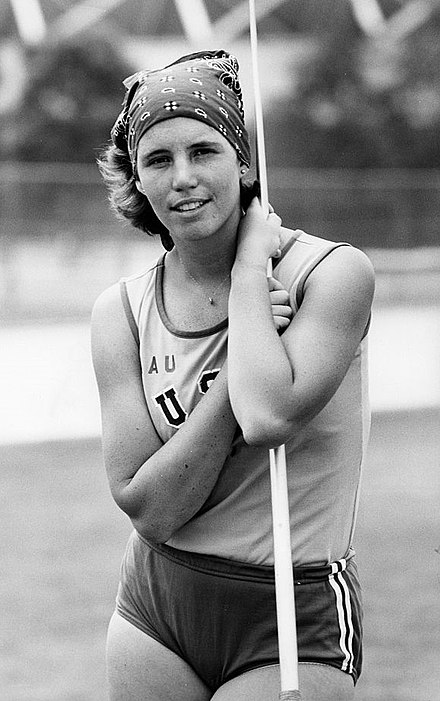
Another Soviet, Elvira Ozolina, the World Record holder in the event, set an Olympic Record of 183-8 (55.98) to win the Women’s Javelin. Winning silver and bronze were Czech Dana Zátopková (176-5 [53.78]) and the Soviet Union’s Birutė Kalėdienė (175-4 [53.45]). Finishing 13th was Karen Anderson-Oldham, who set the 4th American Record of her career with a throw of 166-1 (50.62).
Medalists/Results: http://en.wikipedia.org/wiki/Athletics_at_the_1960_Summer_Olympics
Olympedia Reports: http://www.olympedia.org/editions/15/sports/ATH
Video (Men’s 100): https://www.youtube.com/watch?v=YpusAWku-mw
Dave Sime Feature: https://www.youtube.com/watch?v=1dHzg8k4IO8
“The Olympics That Changed The World”–Amazon Books:
https://www.amazon.com/Rome-1960-Olympics-Changed-World/dp/1416534075
NY Times Review: http://www.nytimes.com/2008/07/13/books/review/Margolick-t.html
1968–Frank Covelli set an American Record of 284-8 (86.77) in the Javelin in Long Beach, CA.
1972–Without Eddie Hart or Rey Robinson to deal with (see Aug.31), the Soviet Union’s Valeriy Borzov (10.14) won the gold medal in the Men’s 100-meters at the Munich Olympics, followed by American Robert Taylor (10.24) and Jamaica’s Lennox Miller (10.33).
East Germany’s Ruth Fuchs, who had set a World Record earlier in the year, won the Women’s Javelin with a throw of 209-7 (63.88), an Olympic Record. Teammate Jacqueline Todten, only 18, set a World Junior Record of 205-2 (62.54) in the final round, moving past another 18-year old, American Kate Schmidt (196-8 [59.94]) into 2nd place.
Medalists/Results: http://en.wikipedia.org/wiki/Athletics_at_the_1972_Summer_Olympics
Olympedia Reports: https://www.olympedia.org/editions/18/sports/ATH
M100 (slo-mo): https://www.youtube.com/watch?v=C1KuKlABm0k
https://olympics.com/en/video/munich-glory-for-borzov-in-100m-final-munich-1972
Video(Borzov): http://www.youtube.com/watch?v=qNdvwbbws6o
1983–France’s Thierry Vigneron set the 4th of his 5 World Records in the Pole Vault, clearing 19-1 ½ (5.83) at the Golden Gala meet in Rome. Countryman Pierre Quinon only had 4 days to enjoy his status as WR holder, having cleared 19-1 (5.82) on August 28.
Louise Ritter upped her American Record in the High Jump by one centimeter by clearing 6-7 (2.01).
WR Progression: http://en.wikipedia.org/wiki/Men’s_pole_vault_world_record_progression
Hall of Fame Bio(Ritter): https://www.usatf.org/athlete-bios/louise-ritter
1987–Gone were the days when he would dominate his event, but Edwin Moses still had the heart of a champion. A day after celebrating his 32nd birthday, Moses (47.46), the 2-time Olympic gold medalist (1976,1984), barely held off the closing finishes of U.S. teammate Danny Harris (47.48) and Germany’s Harald Schmid (47.48) to win his 2nd World title in Rome. The finish was so close, the outcome wasn’t certain (to most observers-Moses was confident he had won) until the PA announcer read the results of what was considered the greatest hurdles race in history.
In a statistical anomaly, the first five finishers in Rome matched their placing in the final at the 1984 Olympics! (Moses, Harris, Schmid, Sweden’s Sven Nylander-48.37), Senegal’s Amadou Dia Ba (48.37).
One of my prized possessions is an autographed (by Moses) copy of the official finish-line photo from the race!
Jackie Joyner-Kersee was on World Record pace through the first five events of the Heptathlon, but the heat took its toll in the final two events, leaving her with a still-great winning score of 7,128 points (564 ahead of 2nd place), just 30 points short of her then-WR of 7,158 and still the 5th highest score in history. She would also win the Long Jump 3 days later. Finishing 2nd in the Hep was the Soviet Union’s Larisa Nikitina (6564) and the bronze medal went to 35-year old American Jane Frederick (6502).
JJK’s marks:
100-hurdles 12.91
High Jump 1.90/6-2 3/4
Shot Put 16.00/52-6
200 22.95 (Record 4256 after first day)
Long Jump 7.14/23-5 1/4
Javelin 45.68/149-10
800 2:16.29
All-Time Hep List (World)
7291 JJK 1988 Olympics Seoul
7215 JJK 1988 U.S. Olympic Trials Indianapolis
7158 JJK 1986 Sports Festival Houston
7148 JJK 1986 Goodwill Games Moscow
7128 JJK 1987 World Championships Rome
7044 JJK 1992 Olympics Barcelona
Kenya’s Billy Konchellah (1:43.06) won the 1st of his 2 World titles in the Men’s 800 over Great Britain’s Peter Elliott (1:43.41) and Brazil’s José Luíz Barbosa (1:43.69).
The Soviet Union’s (and Russia’s) Sergey Litvinov (272-6 [83.06]) repeated as World Champion in the Men’s Hammer Throw. Teammate Jüri Tamm (Estonia/265-3 [80.84] won the silver medal and East Germany’s Ralf Haber (264-11 [80.76]) the bronze.
Soviet Tatyana Samolenko (Ukraine/8:38.73) won the Women’s 3000-Meters over 37-year old Romanian Marica Puica (8:39.45) and East Germany’s Ulrike Bruns (8:40.30). Samolenko appeared to be running within herself as she passed Puica in the homestretch, knowing that she still had two rounds of the 1500-meters to run in the next few days (she would win a 2nd gold medal in that event).
Medalists/Results: https://en.wikipedia.org/wiki/1987_World_Championships_in_Athletics
Videos: M400h M800 W3000 Men’s Hammer
NBC’s Day 4 Coverage: https://www.youtube.com/watch?v=NSUfQ1qvBOU
1989—For the 2nd year in a row, Morocco’s Said Aouita (5000) and Romania’s Paula Ivan (1500) were the winners of the $25,000
1st-place prize at the 5th edition of the IAAF Mobil Grand Prix, held this year in Monaco.
Results: https://en.wikipedia.org/wiki/1989_IAAF_Grand_Prix_Final
1991—It was a busy final day at the World Championships in Tokyo, with 9 finals being contested.
It was a titanic battle in the Men’s High Jump, with Charles Austin, who had set the American Record of 7-10 ½ (2.40) a month earlier, equaling the Championship Record of 7-9 ¾ (2.38) to top Cuba’s Javier Sotomayor, the World Record holder, and fellow American Hollis Conway, both of whom cleared 7-8 ¾ (2.36). Finishing out of the medals was Great Britain’s Dalton Grant, who also cleared 7-8 ¾. Tied for 5th at 7-8 (2.34) in this deep field were the Bahamas’ Troy Kemp and Cuba’s Marino Drake.
Austin moved from 4th place to 1st with his 2nd-jump clearance of 7-9 ¾. Sotomayor passed at that height, and an ankle injury forced him to withdraw after missing once at 7-10 ½ (2.40).
The Men’s Marathon started at 6am, but the runners still had to deal with hot and humid conditions. Much to the delight of the marathon-crazed host country, their own Hiromi Taniguchi (2:14:57) won the race, followed by Djibouti’s Ahmed Salah (2:15:26), who had also won the silver medal at the 1987 Worlds (and bronze at the 1988 Olympics), and the surprise bronze medalist, American Steve Spence (2:15:36).
Spence, who has been the head X-Country coach at Shippensburg University since 1998, said to the NY Times years later, “’Was I the third most fit person in that race? Absolutely not. Was I the third most talented? Absolutely not.’ What made the difference, he said, was his training and strategy.”
Helping Spence get ready for the race was noted expert Dr. Dave Martin, who described the conditions in Tokyo as “the most challenging…that have ever been reported for world championships”.
Martin was also an advisor to the U.S. marathon team at the 2004 Olympics, when Meb Keflezighi (silver) and Deena Kastor (bronze) both wound up with medals!
Algeria’s Noureddine Morceli won the first of his 3 World titles in the Men’s 1500, setting a Championship Record of 3:32.84. Winning silver and bronze were Kenya’s Wilfred Kirochi (3:34.84) and Germany’s Hauke Fuhlbrügge (3:35.28).
Merlene Ottey, the bronze medalist in the 100 and 200, earned a gold medal after her come-from-behind anchor led Jamaica (41.94) to a win in the Women’s 4×100 over the Soviet Union (42.20) and Germany (42.33). The U.S. dropped the baton in their heat!
Team USA fared much better in the Men’s 4×100, as a lineup of Andre Cason, Leroy Burrell, Dennis Mitchell, and Carl Lewis won and set a World Record of 37.50. France finished 2nd in 37.87 and Great Britain was 3rd in 38.09. Lewis, Burrell, and Mitchell had earlier swept the medals in the 100. Said Lewis, “We had something to prove, and that was that American sprinters are supreme. All summer we’ve heard that the French have been saying that the U.S. isn’t a proper team and that they can’t change the baton”.
Kenya’s Yobes Ondieki, an All-American while at Iowa State, won the Men’s 5000 with a Championship Record time of 13:14.45. 2nd and 3rd were Ethiopia’s Fita Bayisa (13:16.64) and Morocco’s Brahim Boutayeb (13:22.70).
China’s Xu Demei (225-8 [68.78]) won the Women’s Javelin over East Germany’s Petra Felke (225-4 [68.68]), the World Record holder, and Germany’s Silke Renk (219-2 [66.80]).
The Soviet Union was even with the U.S. after the first three legs of the Women’s 4×400, thanks to a 48.9 split by Olga Nazarova, but Olga Bryzgina (48.7) ran away from Lillie Leatherwood (50.4) on the anchor leg to give the Soviets the win (3:18.43-3:20.15). Running the first 3 legs for the U.S. were Rochelle Stevens (50.8), Diane Dixon (49.7), and Jearl Miles (49.3). 3rd was Germany (3:21.25).
The Men’s 4×400 provided a thrilling climax to these World Championships as Great Britain upset the U.S., 2:57.50 (European Record)-2:57.57. Jamaica (3:00.10) won the bronze medals.
Roger Black (44.7), normally the team’s anchor, gave the Brits a lead on the opening leg over Andrew Valmon (44.9). Quincy Watts put the U.S. in front with a great 43.4 split, with Derek Redmond running 44-flat for GB.
Danny Everett (44.3) kept the U.S. in front, but 200 specialist John Regis tightened things up a bit with his 44.2 split.
Things were looking good for the U.S., since Antonio Pettigrew, the winner of the 400 earlier in the week, would be facing 400-hurdler Kriss Akabusi (44.6) on the anchor leg. But Pettigrew (45.0), swerving to avoid a careless cameraman on the first turn, couldn’t shake Akabusi and was passed in the final 30-meters as the British team celebrated after Akabusi crossed the finish line.
Medalists/Results: https://en.wikipedia.org/wiki/1991_World_Championships_in_Athletics
IAAF Coverage:
Videos: M-4×400 M-1500 W-4×100 M-4×100 M-High Jump
A Look Back (M4x400): https://www.youtube.com/watch?v=1PEdNfnRbAc
Marathon/Spence
Video(no audio): https://www.youtube.com/watch?v=vnkWAuvHb5U
Gary Cohen Interview(Sep, 2013): http://www.garycohenrunning.com/Interviews/Spence.aspx
NY Times(2006): http://www.nytimes.com/2006/07/18/health/nutrition/18mara.html?pagewanted=all
Shippensburg: http://www.shipraiders.com/coaches.aspx?rc=760&path=wxc
Dave Martin: http://www.runnersworld.com/general-interest/dr-dave-martin-on-the-state-of-us-marathoning
1996—Following excellent pacing by fellow Kenyans David Kipsang and John Kosgei, 20-year old Daniel Komen set a sensational World Record of 7:20.67 for 3000-meters in Rieti, Italy (went through 1600-meters in 3:54.7!). The record stood for 28 years until Norway’s Jakob Ingebrigtsen ran a sensational 7:17.55 in 2024!
Komen had come close to breaking Noureddine Morceli’s previous World Record of 7:25.11 on two previous occasions in the last month, running 7:25.16 in Monaco on August 10 and 7:25.87 in Brussels on August 23.
He would set 2 more World Records the following year, becoming the first man to run back-to-back sub-4 minute miles when he ran 7:58.61 for 2-miles, and running 12:39.74 for 5000-meters.
Listen to the excited commentary from Tim Hutchings and Steve Cram in this video: https://www.youtube.com/watch?v=iKA-whL8XgE
https://www.worldathletics.org/athletes/kenya/daniel-komen-14208667
https://en.wikipedia.org/wiki/Daniel_Komen
WR Progression(3000): https://en.wikipedia.org/wiki/Men%27s_3000_metres_world_record_progression
2007—Thanks to a 1st-jump clearance at 19-2 ¾ (5.86), Brad Walker won the Men’s Pole Vault at the 11th World Championships in Osaka over France’s Romain Mesnil, who needed two attempts to clear that height. Walker became the first American to win the event at the Worlds! Six men cleared 19-3/4 (5.81), with Germany’s Danny Ecker, the only man with no misses at that point, winning the bronze medal.
Ethiopia’s Meseret Defar (14:57.91), the 2004 Olympic Champion(and World Record holder), took the lead in the Women’s 5000-Meters with one lap to go, sprinting away from 3 Kenyans to win the 1st of her 2 World titles in the event (she would win again in 2013). Next across the line were Vivian Cheruiyot (14:58.50), Priscah Cherono (14:59.21), and Sylvia Kibet (14:59.26). Missing from the race was Defar’s fellow Ethiopian, Tirunesh Dibaba, who hadn’t fully recovered after winning the 10,000.
Czech Roman Šebrle, another 2004 Olympic Champion and WR holder, stayed close enough to Jamaica’s Maurice Smith in the 1500-Meters to hold on for his 1st WC win in the Decathlon (8677-8644/NR). 3rd was Kazakhstan’s Dmitriy Karpov (8586). Šebrle was the silver medalist at the 2003 and 2005 World Championships. Finishing 18th was an athlete with a familiar name—Alberto Junatorena,Jr (7657), the son of the legendary Cuban star who was a double Olympic Champion in 1976 (400/800)!
American Bryan Clay, the defending champion, was among the leaders before withdrawing from the competition after suffering an injury during the High Jump.
Medalists in the Men’s 50k-Walk were Australia’s Nathan Deakes (3:43:53), France’s Yohann DIniz (3:44:22), and Italy’s Alex Schwazer (3:44:38).
Lauryn Williams, Allyson Felix, and Miki Barber gave the U.S. a decent lead through the first 3 legs of the Women’s 4×100, and Torri Edwards was able to hold off the closing rush of Jamaica’s Veronica Campbell-Brown to secure the win (41.98-42.01). Belgium finished 3rd with a National Record of 42.75.
Darvis “Doc” Patton (10.28) got the U.S. off to a good start in the Men’s 4×100, while Jamaica’s Usain Bolt gained ground on Wallace Spearmon (9.22) with his speedy 9.05 split on the 2nd leg. Great Britain, Brazil, and Japan were right in the thick of things at this point. Tyson Gay, the winner of the 100 and 200 earlier in the week, ran an impressive 9,05 around the turn on the 3rd leg, while Jamaica’s Nesta Carter could only manage a 9.40. Asafa Powell, who finished a relatively disappointing 3rd in the 100, ran a sensational 8.84 anchor for Jamaica, but it wasn’t enough to catch Leroy Dixon, who finished off the U.S. victory (37.78-37.89). Also breaking 38-seconds in this deep final were Great Britain (37.90) and Brazil (37.99), with Japan right behind in 38.03.
(The IAAF’s Biomechanical team was able to provide the individual splits)
Medalists/Results: https://en.wikipedia.org/wiki/2007_World_Championships_in_Athletics
IAAF Coverage:
Defar: https://worldathletics.org/news/news/osaka-2007-womens-5000m-defar-was-100-per-c