


Ditaji Kambundji’s Breakthrough Moment in Tokyo
We all knew this was one of the most unpredictable race heading into the world championhips. But if 10 people were to draw out their bingo cards of prediction, almost no one will have had Ditaji Kambundji on theirs. But the Swiss hurdler became something she had never been before in Tokyo; a global champion. The 23-year-old long recognized as talented but overshadowed, ran the race of her life to capture the women’s 100m hurdles title in Tokyo. In doing so, she surprised her rivals, her fans, and, by her own admission, herself.
Kambundji crossed the line in 12.24s, a national record and the kind of breakthrough that redefines a career. Until then, her personal best stood at 12.40, a mark she had hovered around without quite breaking through. On this night, with the weight of expectation sitting more heavily on others, she produced something remarkable. When the clock confirmed her victory, Kambundji clasped her face in shock, later admitting she had not fully believed the moment was possible.
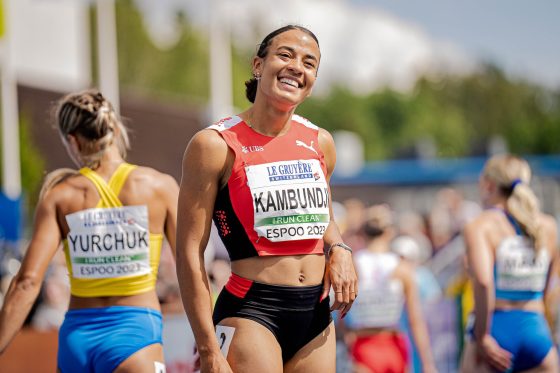
Her name is already familiar in European track circles, partly because of her family. Her sister, Mujinga Kambundji, is one of Switzerland’s most decorated sprinters, a two-time world indoor champion with medals on the outdoor stage. Ditaji’s own progress had often been measured against that standard. While Mujinga had carved her place among the global elite, Ditaji had seemed to linger at the edge, producing fine indoor performances but struggling to replicate them when it mattered most outdoors.
The Tokyo final, however, played out in her favor. The field was packed with decorated athletes. Nigeria’s Tobi Amusan, the 2022 world champion and world record holder, arrived as a heavy favorite. Masai Russell of the United States, the Olympic champion and the fastest hurdler in 2025 with a time of 12.17, was widely tipped for the crown. Grace Stark, another American, had stacked Diamond League victories earlier in the season and came in as one of the most consistent hurdlers of the year.
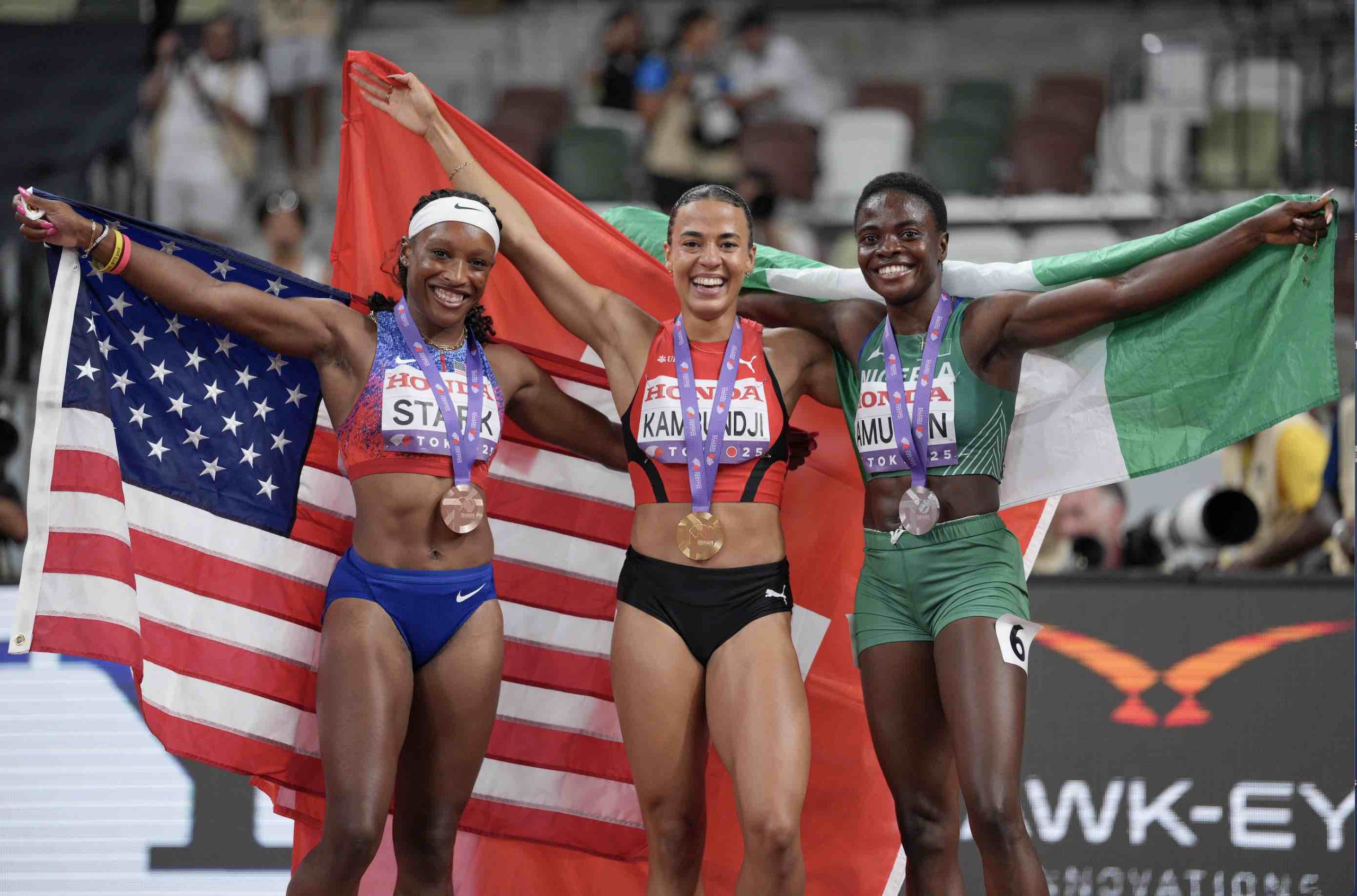
Yet the race belonged to Kambundji from the moment the gun went off. She burst out of the blocks sharply and carried clean rhythm through the hurdles. Amusan, though fast in the final stages, could not reel her in and settled for silver in 12.29. Stark claimed bronze in 12.34, a performance she described as satisfying given the caliber of competition. Russell, for all her early-season brilliance, clipped too many hurdles and fell back to fourth. Danielle Williams of Jamaica, a two-time world champion, ended seventh in 12.53.
Kambundji, calm but wide-eyed afterward, explained how she had tried to block out the occasion and focus only on her own race. “I was giving my all,” she said. “I tried to focus on myself. I was calm and pretty collected. I knew I had it in me. You could see on my face how happy I was when I realized I won. I was surprised because I knew all my competitors were able to win. Getting a personal best is nice but all that mattered today was the title.”
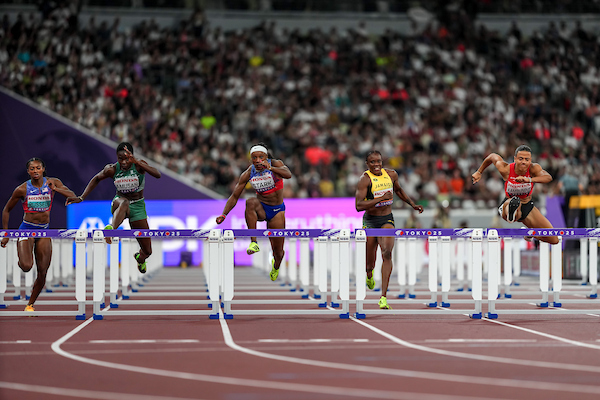
For Switzerland, her victory was historic. In a country with limited tradition in sprint hurdles, Kambundji’s run placed her among the fastest in history. Her 12.24 makes her the joint-seventh quickest woman ever at the distance, a milestone that may elevate her beyond her sister’s shadow. For Ditaji herself, it represents validation after years of trying to convert promise into performance.
The final in Tokyo was a reminder of how unpredictable the hurdles can be and how opportunity often belongs to those ready to seize it. Kambundji’s win was the product of preparation and composure under pressure. She left the track as a world champion, and her disbelief gave way to the quiet joy of knowing that her career had shifted into a new place.
For Ditaji Kambundji, it was the night when she no longer had to be known as someone else’s sister, or as an athlete who struggled outdoors. In Tokyo, she became the fastest woman in the world over 100m hurdles.