

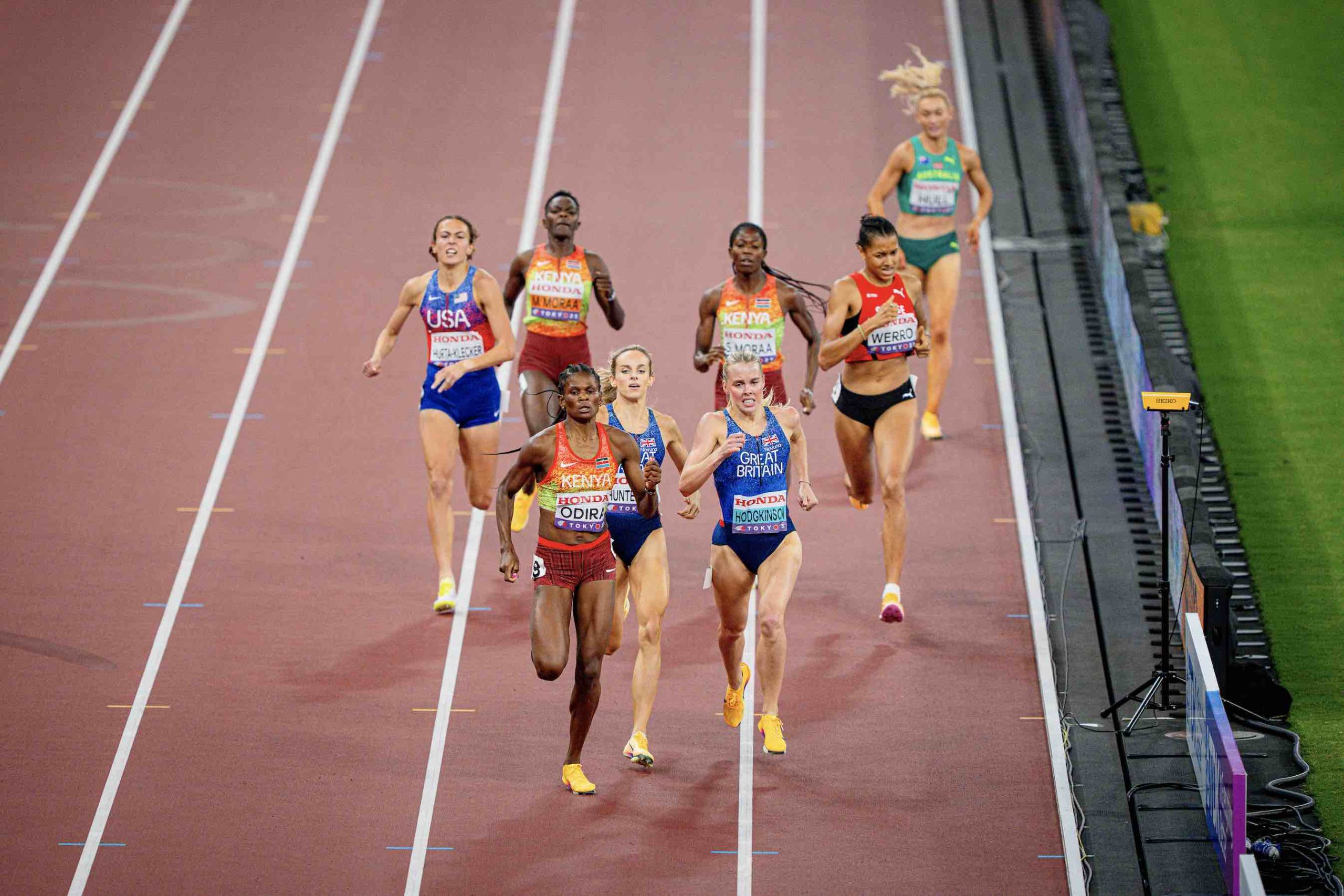
This is a feature on the Women’s 800 meter race in Tokyo 2025, which, Stuart Weir insists was actually the M11 Club Championship race. Stuart Weir is RBR’s senior writer for Europe.
Georgia Hunter-Bell is the M11 club champion.
The M11 Track Club championship took place, and Georgia Hunter-Bell was the winner. To give the club championship more exposure, the club decided to hold it at the Tokyo Olympic Stadium and invite other runners to participate. Although they could compete for the world championship, they couldn’t win the club championship.
Keely Hodgkinson was just 19 when she announced herself on the world stage of middle-distance running with a silver medal at the Tokyo Olympics in this very stadium. She followed that with world championship silver medals in 2022 and 2023, finally striking gold at the Paris Olympics. An injury early in 2025 initially looked like putting an end to her year, but she managed to compete in two races in August, with times of 1:54 and 1:55, proving her fitness for the world championship.
The result was
1 Lilian Odira 1:54.62 CR/PB
2 Georgia Hunter-Bell 1:54.90 PB
3 Keely Hodgkinson 1:54.91
4 Srah Moraa 1:55.74 PB
If, at the beginning of August, you had offered Keely a 1:54.91 in the world championship final, she would have bitten your hand off. If you had told her it would only get her a bronze medal, she would have laughed in your face. The runs of the two Kenyans were magnificent, but you will forgive me if I don’t say anything more about them as they were only in the secondary race, the World Championship, not the M11 club championship.
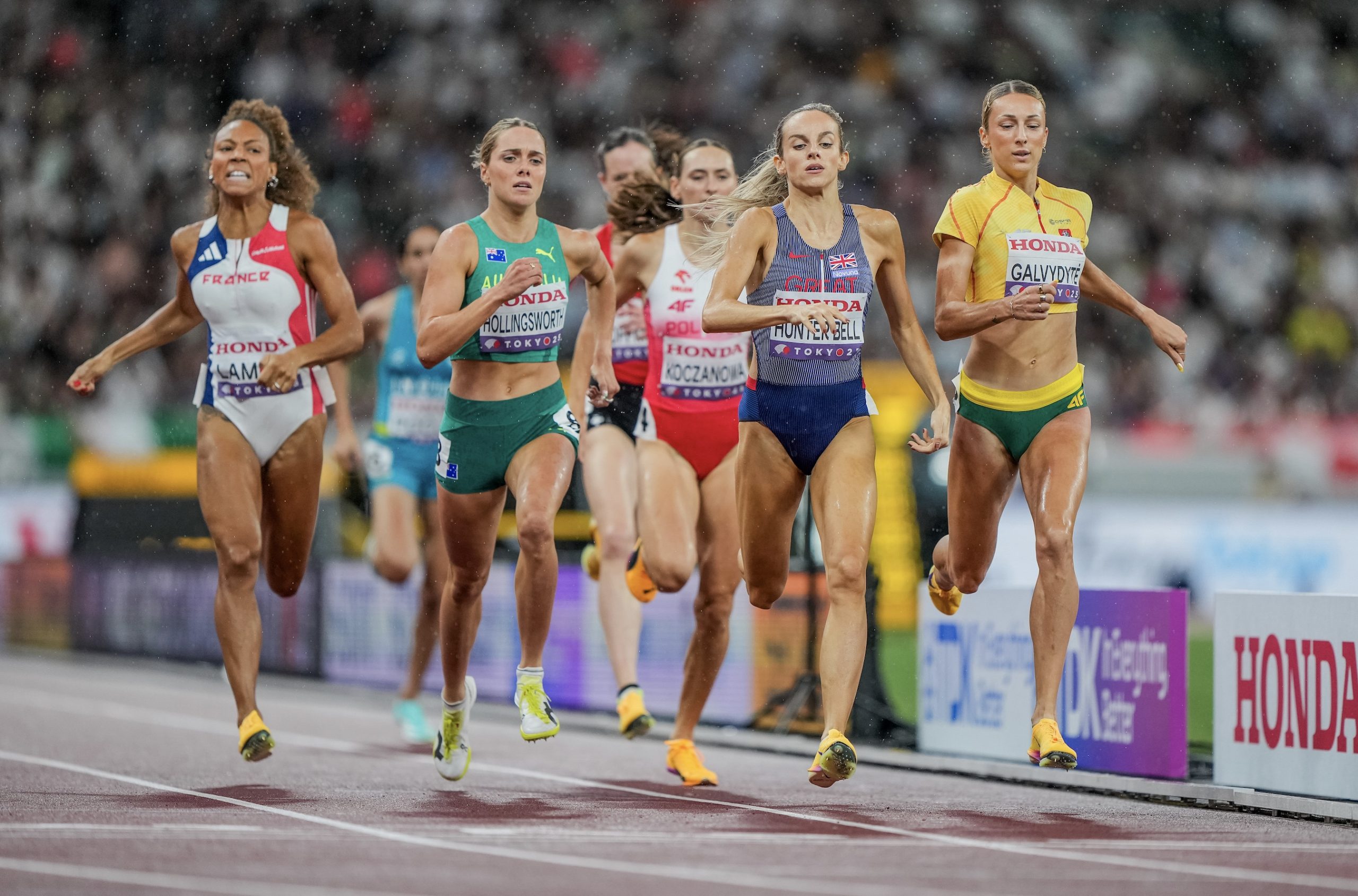
Keely said afterwards: “I’m proud of both of us, we both got a medal, to get third in 1:54 and be consistent around after what I have been through this year, I’m thrilled. It’s another global medal, my fifth one in a row, something to be really proud of”.
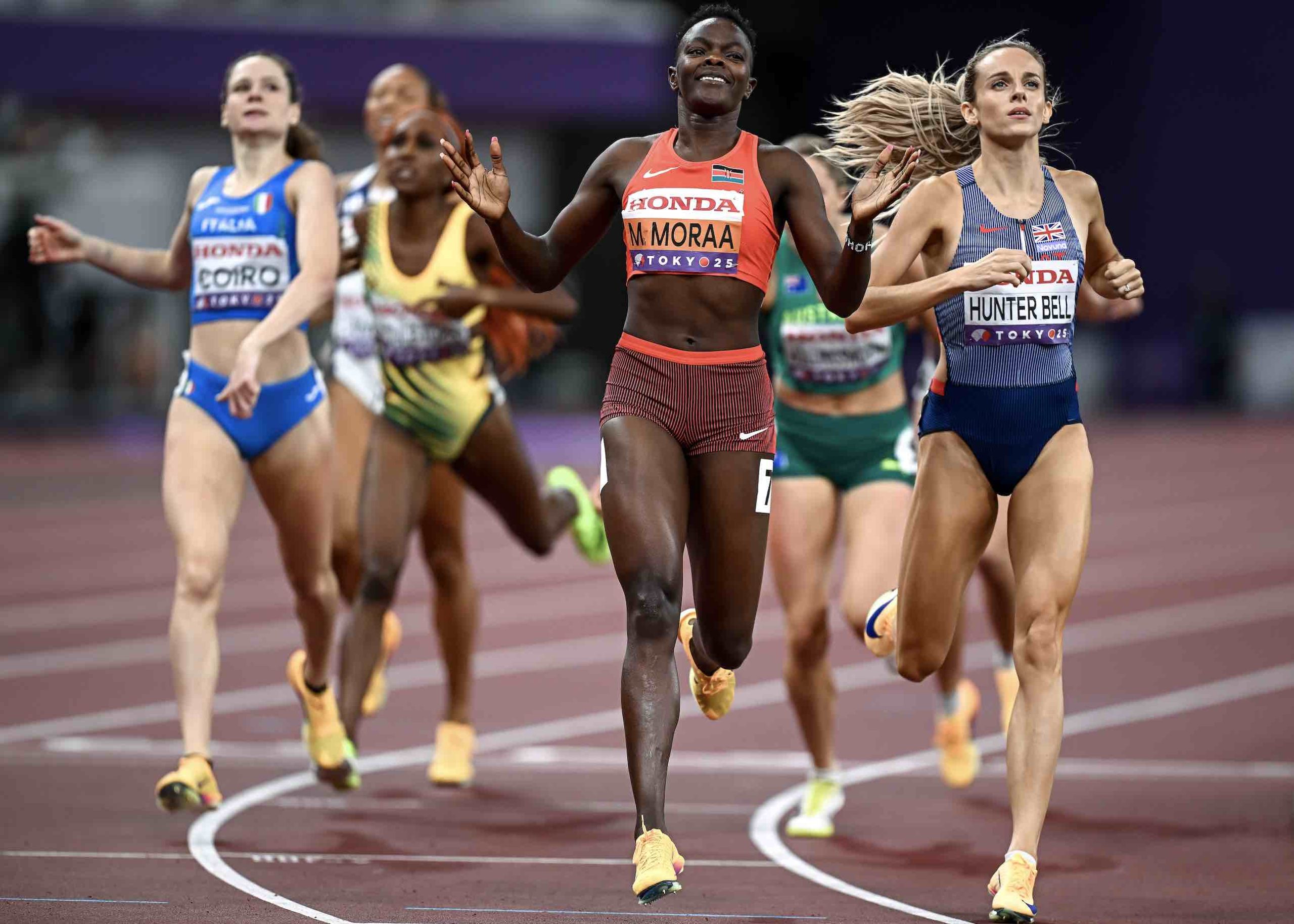
Georgia Hunter-Bell commented, “I am very proud of my performance tonight. This is my best time ever. The pace was harder than expected in the first lap, and I tried not to get dropped. This has been a great season, and I want to thank our coach. I felt excellent today. I tried to use the least amount of energy to make it to the final. I felt really relaxed in the semifinals and put myself in the best position for the final. Keely and I are fortunate to train together. That’s how we become the fastest in the world. We push each other. You don’t want to be alone in training. You need people better than you. I was away from the track for a while when I was in technology sales for seven years. People don’t see all the years of training I did while I had a full-time job, funding myself to attend races. I am so happy it’s all come together”.
Hunter-Bell has quite a backstory if you’re not familiar with it. She received a scholarship to an American University, but was overtrained and constantly injured, which led her to give up running. After 2017, she ran only occasionally. In 2021, her fastest 1500 time was 4:48; in 2022, it was 4:42. In 2023, she reconnected with her old coach, Trevor Painter. After a solid winter, she got selected for the World Indoors and came fourth. She continued to make remarkable progress, earning a spot on the British team for the Paris Olympics and taking a bronze medal in 3:52.61.
Earlier this year, Georgia let it be known that she was undecided whether to run the 800 or the 1500 or to double up. She described the factors in deciding between the 1500 and the 800 in terms of the 1500 compared to Paris 2024 as having “lots of depth and really lots of good people that are regularly coming in those top three positions, and the event has gotten even faster than last year”. About the 800, she said: “The 800 is something that I’ve just been running better in this year, I would say. Both in terms of time, the placement is a little more open. But it was tough because I’m ranked, I think, fourth or fifth across both events. So I’m in that medal fighting position across both”. She added that qualification for the final was more challenging in the 800 with only two automatic places per semi-final – there is no room for error. It’s only the top two”.
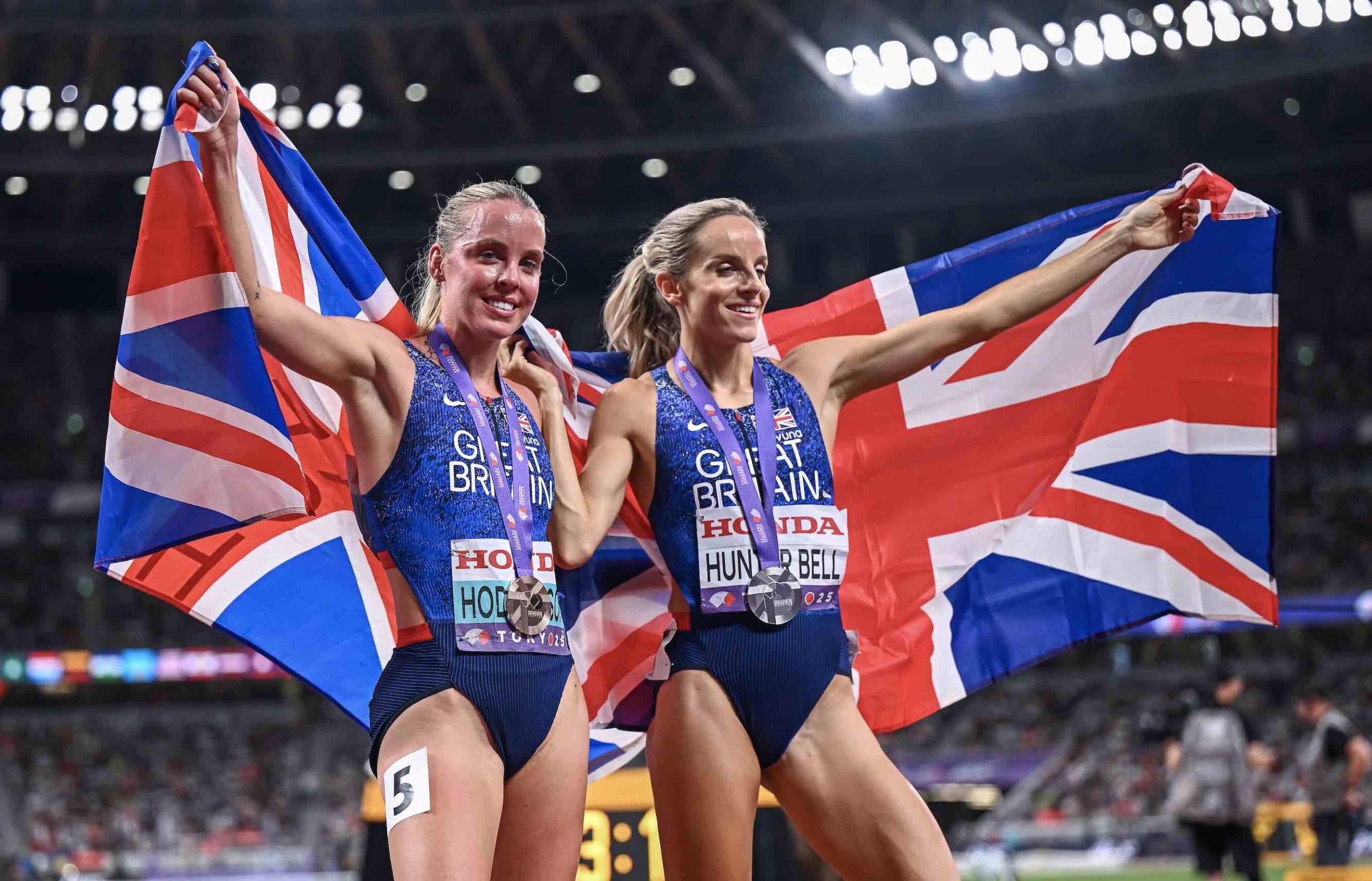
She admitted that she really wanted to double-up: “I was thinking about it a lot. It was not an easy decision. It would have been very cool to do the double, but I would have been absolutely exhausted trying to do six races in nine days and probably wouldn’t have been able to be the best in the world at both”. She added that logistics had been an essential factor in her decision – specifically, the athlete’s hotel was a considerable distance from the stadium, and the warm-up area was approximately 20 minutes away by bus. She felt that the two hours on the bus, to and from the stadium, would have further sapped her energy. All the more so, as several offer races were scheduled late in the evening. In the end, she settled for the 800 and finished up with a silver medal. She summed it up: “I am just a human being doing six races in nine days in the humidity. With how late the races were, that was a bit of a concern of mine. I was pretty sure I wouldn’t sleep for the whole night after the 1500m final at 10 pm, by the time you have media, anti-doping, physio, and all that other stuff. And that would really impact me for the 800; even if I tried my very best to be in recovery, it would just be logistically really tough.
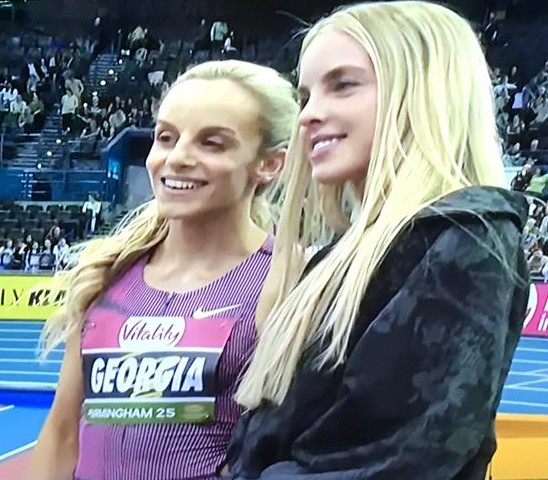
Another dimension to the race is that Keely and Georgia are not only close friends but also training partners. And we were roommates in the British preparation camp and in Tokyo. Jenny Meadows, wife of Trevor and co-coach, told BBC viewers that Trevor had found himself in the hilarious position of telling Georgia where he thought Keely was vulnerable and how Georgia should attack her, as well as advising Keely on how to run her race to beat Georgia.
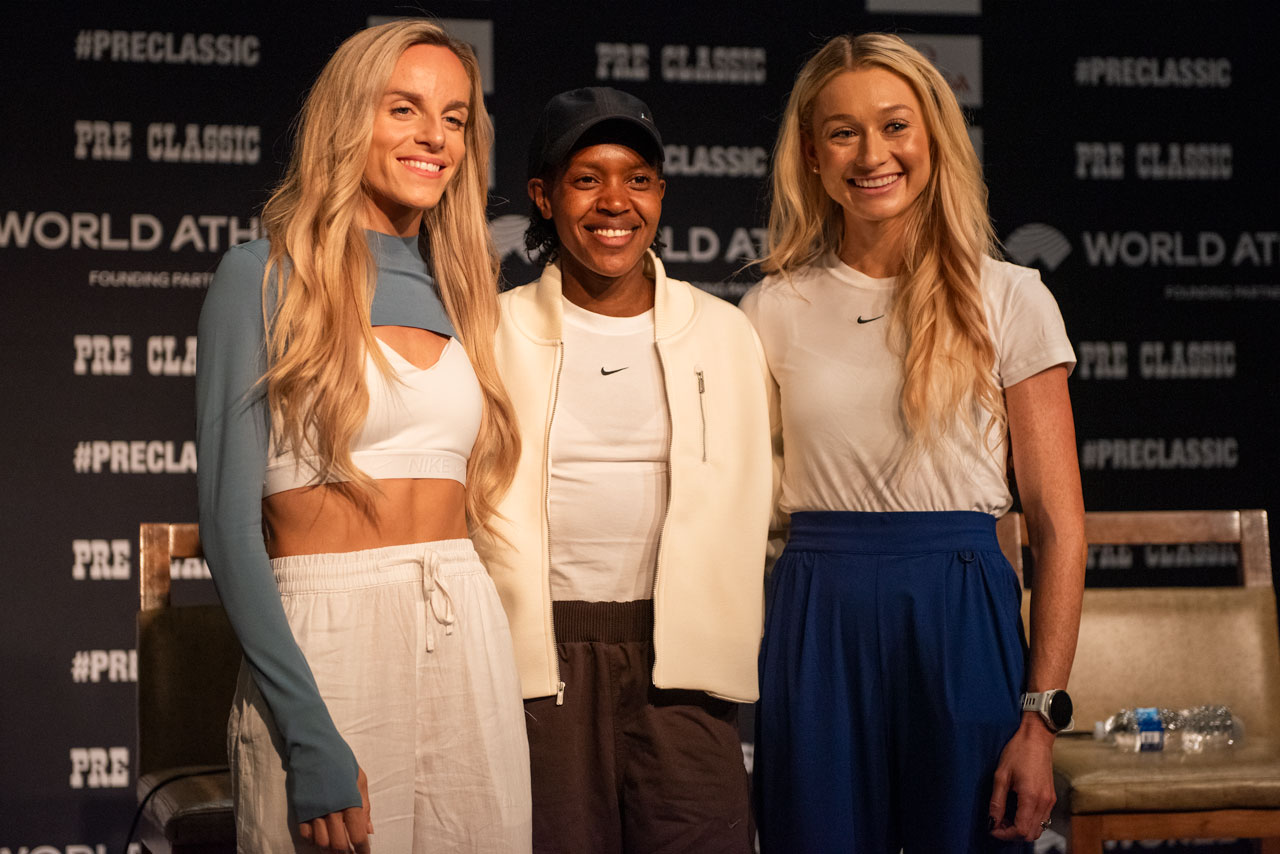
Talking to Georgia a week before the championships, I discussed with her the unusual perspective she brought to the track, having given up running and then returning to it years later. She told me, “I personally see it as an advantage because I have an excellent perspective. Every day, I know that training is hard, but I’m still very excited about it. I know how special this is. I’m privileged to be in this position. And I think maybe when you’re young and you just go straight into a professional contract and you think you’ve got so many races ahead of you for the rest of your life, you don’t put the same kind of maybe fight into every race, which I feel like I do bring. I really want to seize every opportunity because I know how special it is. And so I think that’s a very unique perspective, which, as you say, not many athletes that are on the start line in that world final are going to have been working a full-time job and juggling training for the last seven years. And I think if I have got to this point by doing that for so long, like I have got so much more to show now that I’m a full-time pro. So I think that makes me very excited. I don’t miss waking up at the crack of dawn to train before a hectic day of calls and meetings with clients. That was exhausting.”.
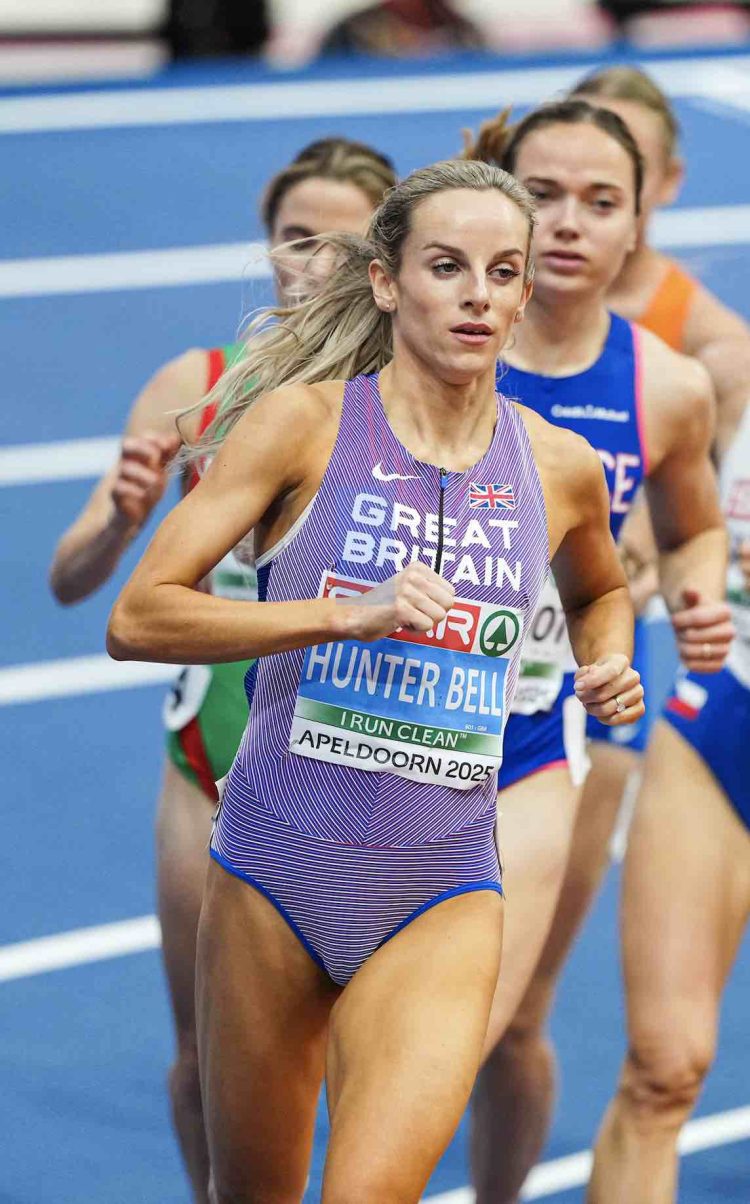
Her field was cybersecurity technology sales. I suggested to her that over the last year or two, there had been several high-profile cases of industrial hacking. Quick as a flash, she replied, “Yeah, I know they’re falling apart without me.” Adding that she found the whole world of cybersecurity very fascinating: “I do stay up to date on all of the latest hacking that’s going on across the world. I sometimes miss the hustle and bustle of closing deals and that kind of excitement and adrenaline. But obviously, I wouldn’t trade anything to be doing my passion for a job”.
PS The M11 track club takes its name from the first half of the postcode/zip code. They train in the M11 district of Manchester.