

Sydney McLaughlin-Levrone Shows Grace and Grit in Tokyo
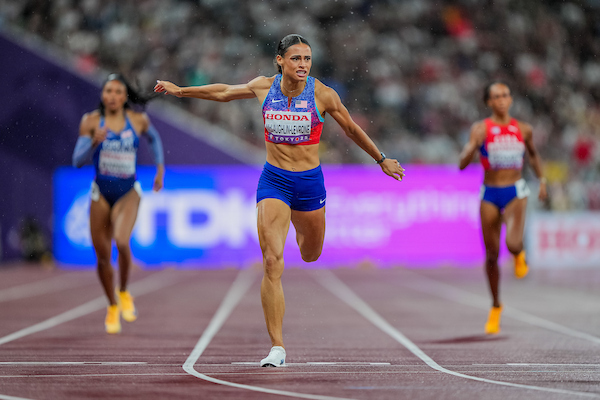
Sometimes, the face of a sport doesn’t need to be loud and brash. They just have to deliver greatness anytime there is something on the line. Sydney McLaughlin-Levrone showed the world once again the depth of her talent. Clocking 47.78 seconds in the women’s 400 meters, she became the world champion in a discipline she has only recently embraced. It was the fastest time run in 40 years and the second fastest ever recorded.
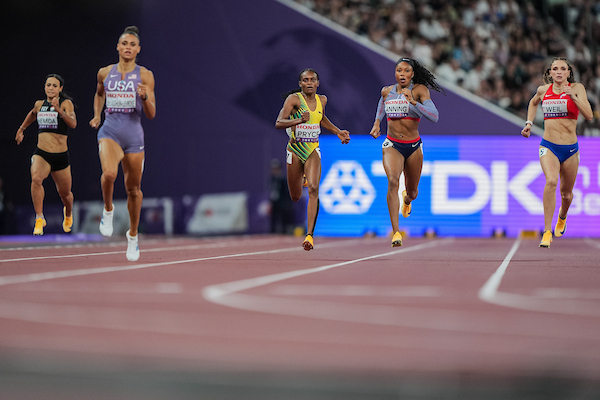
The achievement landed with a mixture of shock and inevitability. Fans had grown used to McLaughlin-Levrone breaking barriers in the 400 hurdles, where she has rewritten the record book and won two Olympic titles. Now, with the hurdles removed, she proved her command of the flat 400, an event that many assumed would belong to Marileidy Paulino of the Dominican Republic for years to come. Paulino ran 47.98, a time that would have brought headlines on any other night. Instead, it placed her behind an American who is redefining what the event can look like.
McLaughlin-Levrone is 26 years old and already carries a career that feels complete. Six of the ten fastest times in the history of the women’s 400 hurdles belong to her. Her smooth stride pattern, with 14 steps between hurdles instead of the traditional 15, has reshaped the technical side of the event. Now, she has crossed into the flat 400 and immediately delivered something historic. She is not finished yet. Her coach, Bobby Kersee, has spoken openly about a goal that once sounded impossible: breaking 50 seconds in the 400 hurdles. The way she has adapted to the flat race only strengthens that ambition.
What made Thursday night remarkable was not simply the time on the clock but the manner in which she achieved it. McLaughlin-Levrone charged out of the blocks, a bold move in a race that punishes those who miscalculate their energy. She pressed hard down the back straight and carried her rhythm into the final bend, knowing Paulino and Bahrain’s Salwa Eid Naser were within striking distance. As the strain of the last 100 meters set in, her form remained composed. Her head did not rock. Her stride did not break. She looked fluid even as her competitors labored.
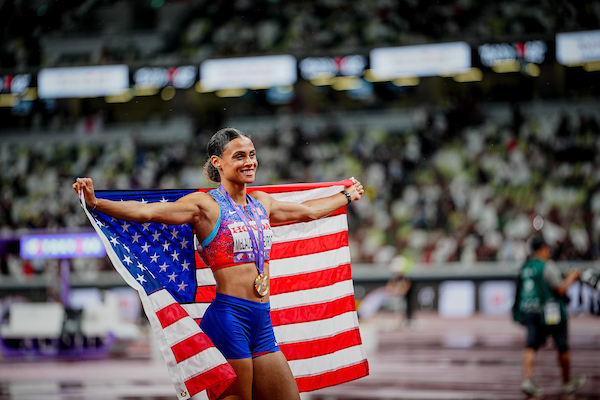
The finish told its own story. McLaughlin-Levrone crossed the line, acknowledged her rivals with a dap, then walked to an open space. She crouched low, her hand on the track for balance, staring up at the screen in quiet disbelief. The expression on her face was one of exhaustion mixed with wonder. She knew she had done something extraordinary, and for a rare moment she seemed as surprised as everyone else.
Great athletes often build their careers on repeated excellence. McLaughlin-Levrone adds another layer. She dominates one event, then moves into another and makes it hers. The thought of her winning both the 400 hurdles and the flat 400 at the Los Angeles Olympics in 2028 is no longer idle speculation. It has become a realistic goal, though the schedule would need adjustments for recovery between rounds. Even the suggestion points to how high she has set the bar.
The comparisons that follow her now are unavoidable. Usain Bolt comes to mind because he was the last athlete to combine grace, speed, and inevitability in such fashion. Allyson Felix also provides a measure, given her seven Olympic gold medals and long reign as the face of American sprinting. McLaughlin-Levrone already has four Olympic golds and could add three more in Los Angeles if she succeeds in the hurdles, the flat 400, and the 4×400 relay. That would place her among the most decorated athletes in history.
Her rise has been about style. In an era when some athletes build their presence through brash talk or constant visibility, McLaughlin-Levrone keeps her voice measured. She does not seek the spotlight, but when the race begins, she makes herself unavoidable. She is fiercely competitive, described by those around her as relentless in training and hungry for the toughest competition.
For all her drive, McLaughlin-Levrone remains approachable in tone. After the race, when told that Sebastian Coe had suggested she try the 800 meters, she widened her eyes and laughed. “No comment,” she said with a grin, as if leaving the door open to anything. It was a playful moment that underlined her confidence.
Track and field has long searched for figures who can capture attention beyond the sport’s core audience. McLaughlin-Levrone may be that figure, not because she seeks it but because her talent demands it. Even the casuals are forced to love her. Such talent only comes once in a generation.
Her career is already decorated, her dominance already secure. Yet there is the sense that more is ahead. The flat 400 could be hers in the same way the hurdles have been. And if that is the case, athletics may need to redraw its limits once again.