

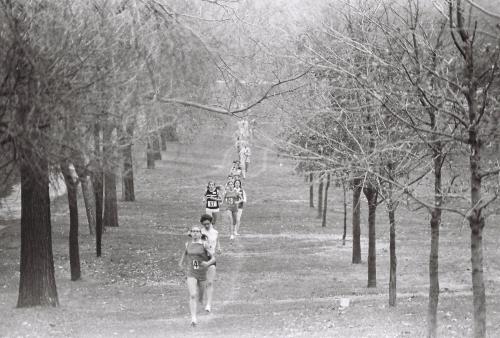
In celebration of the 2026 World Athletics Cross Country in Tallahassee, RunBlogRun is posting a story on the iconic Doris Brown-Heritage, who won ‘the International”, the title for the World Cross Country Champs prior to 1973, when the I.A.A.F. established their Championships. This piece is done by Senior Writer Deji Ogeyingbo, who is finishing his studies at Georgia State for his Masters degree.
Doris Brown Heritage and the Roots of World Cross Country
As the world’s best cross-country runners gather in Florida ahead of the championships in Tallahassee, it is worth pausing to remember a woman whose footsteps still echo through the sport’s history. Long before global television coverage, prize money, and packed fields, Doris Brown Heritage ran her way into immortality and helped define what women’s cross country could be.
In March 1967, in Barry, Wales, Brown Heritage became the first official women’s international cross-country champion. The medal she earned that day now sits in the Museum of World Athletics as a symbol of achievement. That race marked the beginning of something unprecedented. Over the next five years, she would win every single edition of the International Cross Country Union Championships, the competition that would later evolve into the World Cross Country Championships. Five titles in succession placed her in a class so exclusive that, in the modern era, only Grete Waitz would ever match that total.
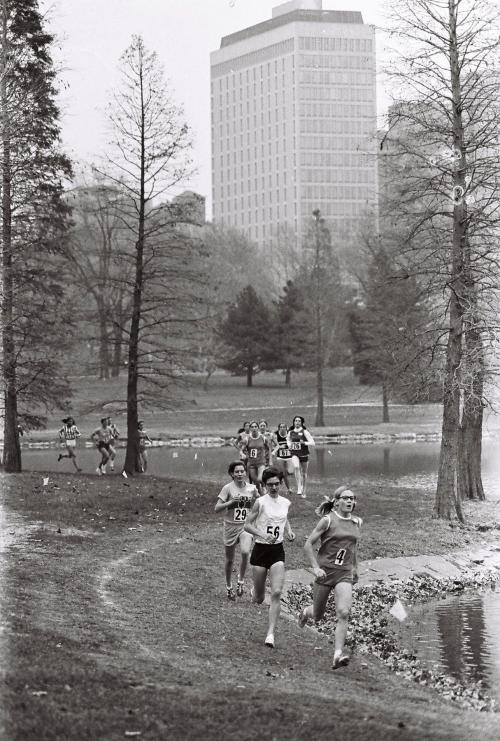
Those victories were not products of favorable circumstances or shallow competition. The fields were small by today’s standards, yet the significance was immense. Women were still carving out space in distance running, and opportunities were limited. Brown Heritage lined up anyway, year after year, and made winning feel inevitable. She ran with a clarity of purpose that transcended the result sheet, showing the sport what consistency, preparation, and belief could look like when no roadmap existed.
Her cross-country dominance flowed naturally from a training ethic that bordered on revolutionary. At a time when women were expected to train lightly and race cautiously, Brown Heritage logged weeks of 100 miles. That level of endurance allowed her to control races rather than react to them. She could dictate tempo, absorb pressure, and break fields apart long before the finish came into view. In five straight championship races, she separated herself cleanly, most memorably in 1967 when she won by 37 seconds. That gap spoke less to her rivals’ shortcomings and more to her command of the discipline.
Cross country became the stage where her versatility shone brightest. She arrived with middle-distance speed, having been the first woman to run a sub-five-minute mile indoors, and carried that speed across mud, grass, and uneven terrain. Her ability to blend strength and rhythm made her almost untouchable in championship settings.
Her achievements stretched far beyond cross country, yet the discipline remained the heartbeat of her legacy. Olympic appearances in 1968 and 1972, national titles, world records from the 440 yards to the mile, and international medals all added layers to her résumé. Even so, those five cross-country titles remain the clearest expression of her influence. They came at a moment when women’s distance running needed proof that excellence could exist without compromise.
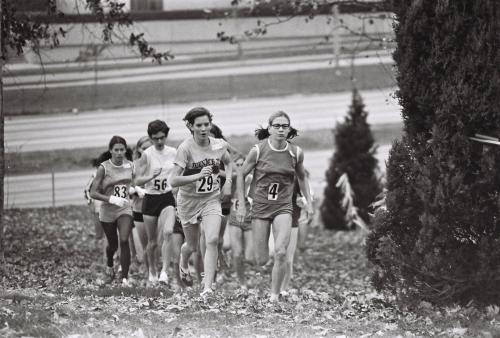
Brown Heritage also carried the sport forward off the course. As a coach at Seattle Pacific University, she shaped generations of athletes with the same principles that guided her racing. Her presence in leadership roles within global athletics signaled progress that once seemed unreachable. She shared knowledge, character, and conviction, ensuring that cross country continued to grow not just in numbers, but in credibility.
As Tallahassee prepares to host the world championships, the modern stars will race on faster courses, in deeper fields, under brighter lights. At the end of the day, cross country still rewards resilience, patience, and a willingness to embrace discomfort. Those values are written into the history of Doris Brown Heritage.
Her career reminds us that greatness depends on commitment, repetition, and belief. Every stride taken by the women lining up this weekend traces a line back to runners like her. Before cross-country became global, she made it meaningful.
Another amazing story on American women’s distance running is about a competitor of Doris Brown-Heritage: Janet Bristol)
Fun Facts on Doris Brown-Heritage, a pioneer in American and World distance running
- Doris Brown-Heritage won five straight World Cross Country titles, 1967-1971, then called “the International.
- In 1966, Doris Brown-Heritage broke five mintues for the mile indoors, a first for women (the first outdoor sub 5 minute mile was Diane Leather in 1954).
- Doris Brown-Heritage owned American records from the 440 yards to the mile. On the World scene, Doris set WRs at the 3,000 meters and 2 miles in 1971! Her 3,000m record was 9:26.9 on 7 July 1971, her 2 mile record was 10:07.0 on 7 July 1971.
- Doris Brown-Heritage finished 5th in Mexico City Olympics (1968) in the 800 meters, and also competed in the 1972 Munich Olympics .
- Doris Brown-Heritage won the silver medals in 1967 and 1971 Pan American Games at the 800 meters!
- In 1976, Doris Brown-Heritage won the 1976 Vancouver Marathon and then, later in the same year, placed second in the 1976 NYC Marathon. Her marathon best was 2:47:35.