

My Greatest Race, Ciara Mageean, Dublin: Gill Books, 2026
ISBN 978 1 8045 8547 4
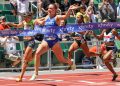
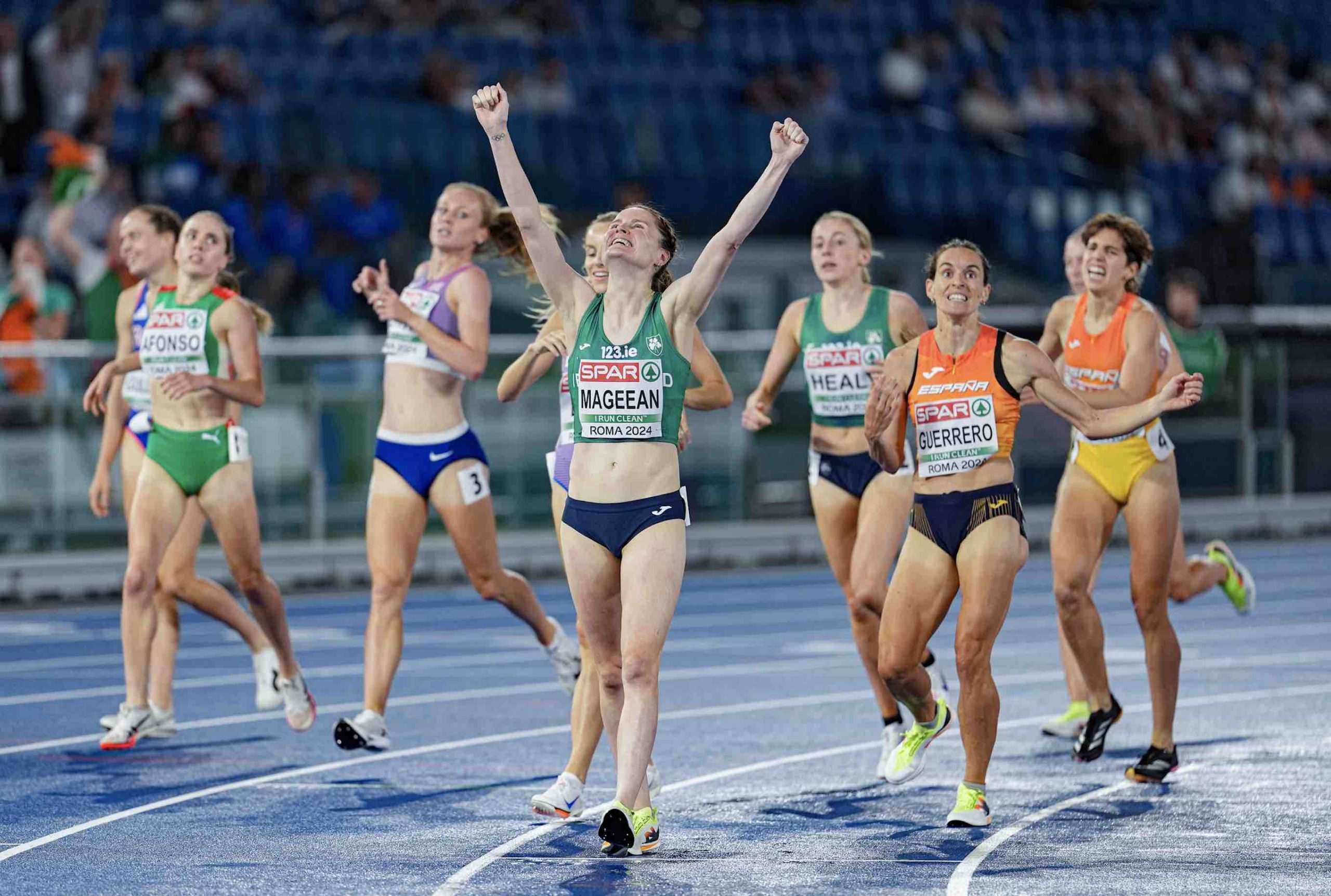
When Ciara Mageean finished first in the 1500m at the European Championships in Rome in 2024, little did she realize that it could prove to be her last ever significant race. Injury forced a last-minute withdrawal from the 2024 Olympics, and cancer has now threatened not only her athletics career but her very life.
I was in the Olympic Stadium in Rome that night in 2024 to see her win the gold medal just as I had seen her take silver in Munich two years earlier. I had also seen her take silver in the Commonwealth Games in Birmingham in 2022 and bronze in the European indoors in 2019, along with watching her in 2 Olympics and a number of Diamond League races. She once gave me time for a proper 1-to-1 interview for a feature in RunBlogRun.

As a young person growing up in Northern Ireland, Ciara played a lot of a game called Camogie – a bit like ice hockey where if you cannot hit your opponent with the stick, then getting the ball is a good second best. Later she discovered her ability to run.
This is a brilliantly written book with the past and present interwoven. The story of her life and athletics career is included in 14 chapters, with, in between, 3 or 4-page italicized mini-chapters on an incident in the course of her illness, almost as a reminder that the cancer never goes away but dominates the story. The two are constantly inter-connected: “As an athlete with my particular injury history, I am uniquely well equipped to cope with the trauma that cancer treatment has on the body. Athletics has given me the physical and mental fortitude to cope with a lot of this”. The book title highlights an eventful life in athletics but the very different race she is now caught up in.

The unexpected cancer diagnosis is described starkly, sparing nothing of the pain and shock – yet with the human touch of not sharing the news with family until after Christmas in order not to spoil it.
The career achievements and disappointments are well described with humour and emotion. There is the irony of the question of whether she could call herself a three-time Olympian. After all, she got the accreditation and competition kit and made it as far as the village in Paris; she just never made the start line.
The process of drug testing for elite athletes is something that most people have no idea about. Ciara describes a time with an injury when she had to keep her leg elevated for 50 minutes every hour for three weeks. During this period in a hotel, she described being awakened very early in the morning, in her underwear and on crutches, to be drug tested! “How ironic was that? I just had to drop out of the Olympic Games because of an injury. I just had surgery on it and was still bleary-eyed with pain, yet the drug testers still turned up”.

This website is always interested in connections between sport and faith. Ciara is honest but unsure of her own position. She identifies as a Roman Catholic, perhaps more culturally than religiously. She writes: “I don’t honestly know if I still believe in God, but I like to think that there’s something more than the here and now”, adding a reference to a person who died: “I like to believe he’s up there somewhere and has seen it from afar”. She acknowledges family members gaining strength through their faith in tough times and sees “prayer as an outlet; it gives people solace… if it helps people… prayer is in itself a form of meditation”.
A compelling story, brilliantly told. My one reservation was the tedious repetition of the F word.