

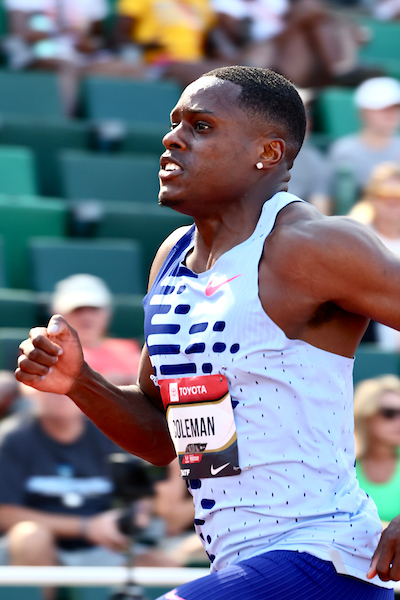
Deji Ogeyingbo wrote this feature on one of our most fascinating athletes, Christian Coleman, as he prepares to battle the world in 2025.
Christian Coleman Stands at a Career Crossroads With No Clear Lane Ahead
Sports will and always be a game of moments. You have to strike when you are hot. A little setback, break, and you stand the chance of being outrun or dethroned: momentum matters a lot. In Track, the United States has a deep resource of sprinters that churns out talented runners every month, that if you blink as an elite sprinter, your spot could be taken from you. Or in the case of Christian Coleman, they run the risk of falling down the pecking order and missing out on global championships.
Once the fastest man on Earth, Coleman now finds himself chasing more than just competitors. He’s chasing rhythm, clarity, and perhaps, a version of himself that feels increasingly distant. The 2019 World Champion in the 100 meters is in a tough spot, and the summer ahead will likely define the next chapter of his career.
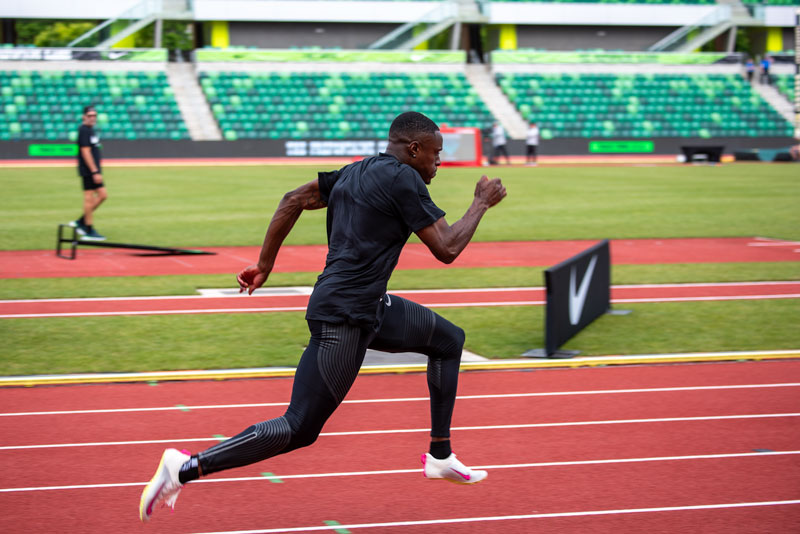
On paper, his 2025 season doesn’t look terrible. Coleman has raced five times in the 100 meters this year. He opened with a promising 10.06 at the Tom Jones Memorial in Gainesville in April. But since then, his performances have hovered just above that mark: 10.18 in Xiamen, 10.13 in Shaoxing, 10.11 in Tokyo, 10.12 in Philadelphia. At this level, small margins matter. And Coleman hasn’t been first across the line in any of them.
His most recent result, a 6th-place finish in the 200 meters at the Grand Slam Track meet in Philly, didn’t help. He clocked 20.66, losing to Zharnel Hughes, Aaron Brown, Andre De Grasse, Bryan Levell, and Joseph Fahnbulleh. This was his fifth straight individual loss. It’s a far cry from the explosive sprinter who once dominated the start and finished races with purpose. These days, the start is flatter, and the finish is still a question mark.
Part of the shift may come down to a coaching decision Coleman made last year. After years of training under Tim Hall, his longtime coach from his University of Tennessee, Coleman opted for change. Hall’s new role as a head college coach made one-on-one sessions less frequent. After missing out on the individual sprint team for the Paris Olympics, Coleman looked for a reset.
He landed in Florida with Dennis Mitchell at Star Athletics, a club that trains some of the sport’s biggest names: Sha’Carri Richardson, Kenny Bednarek, Aaron Brown. Coleman believed this change could recharge him physically and mentally. In theory, it made sense. Mitchell’s program emphasizes power, heavy sprint work, and intense training alongside other elites. But theory doesn’t always align with reality.
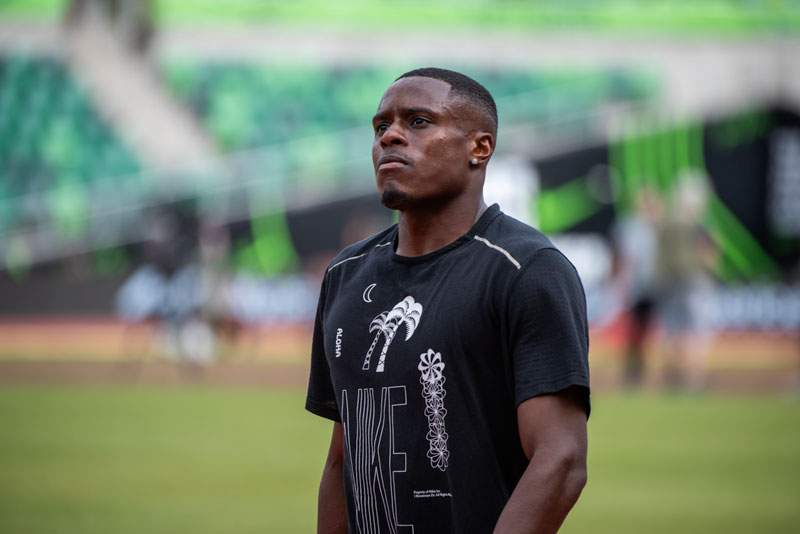
The switch has brought its own challenges. Coleman, now 29, traded a tailored system for a shared one. He’s no longer the focal point. He’s one of many. That means less personalized drills, a new environment, and a training load that can take time to adjust to, especially as the body ages. There’s also the mental side. Leaving a trusted setup, even when it feels necessary, can create uncertainty.
Coleman has always been known for owning the first 30 meters. When he won the world title in Doha, it looked like no one could touch him out of the blocks. Now, others are closing that gap and passing him by the finish. He’s not short on competition. Treyvon Bromell has already posted a world-leading 9.84 this season. Kenny Bednarek is right behind with a 9.86. Fred Kerley, if he gets his head right, remains dangerous. And there’s a wave of younger sprinters coming through. The window is small, and it’s closing fast.
Coleman’s spot at the World Championships isn’t guaranteed. Based on current form, he’s not leading the American pack. The bigger question is not whether Coleman can win a race this summer. It’s whether he can rediscover the spark that made him great. That could mean adjusting again, maybe even going back to Coach Hall. It could mean working with Mitchell to find a better balance. Or it could mean making peace with the possibility that the Coleman of 2019 isn’t coming back, and something new must be built.
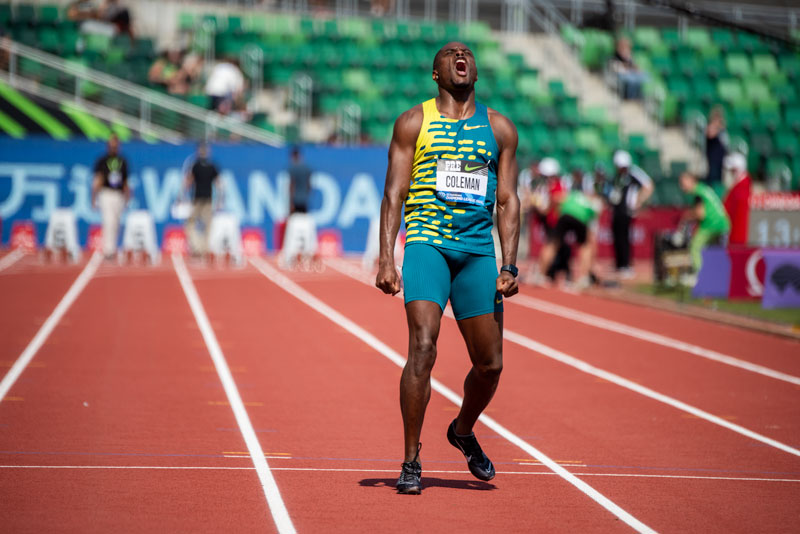
To be clear, Coleman hasn’t lost his talent. The times show he’s still one of the best in the world. But at this level, the difference between third and sixth isn’t just hundredths of a second. It’s belief, timing, preparation, and trust in your process.
The summer ahead is packed. U.S. Trials, Diamond League meets, and the World Championships are all looming. Coleman is no stranger to pressure. He’s been on top before. But this time, he’s not fighting to stay there. He’s fighting to return.
Whatever happens next, one thing is clear: Coleman is at a crossroads. The path he chooses now may decide how much longer his name stays in the headlines, or whether it slowly slips into the background.