

We gave Orrin Konheim a no-win assignment: Watch as much of the NBC and Peacock broadcast as he could handle. The intrepid journalist, keen on succeeding at this task, did just that. He watched hours of the U.S. broadcast and added in YouTube clips as well. Here is how Orrin saw the success of the World Championships broadcast:
Observing the Peacock
At the close of the World Championships, I contacted my friend and running aficionado Tripp to ask his opinion on the Tokyo ’25 coverage, expecting him to agree with me that it was a mess. Surprisingly, he managed to catch the coverage on the same day, while I fell a little behind, and my chances of having a remotely decent experience fell apart.
Of course, Peacock and various broadcasting branches of the NBC family — though they did far less than usual, and that’s partially understandable because of the prevalence of cord-cutting – couldn’t control the fact that their target audience was on the other side of the globe as the event. Through multiple World Cups, Olympics, and competitions in similar circumstances, we’ve all gotten used to the drill: Either turn your sleeping schedule into a laboratory experiment in abnormality, or do your best to duck for cover at any spoilers while trying to watch the coverage later in the day.
But the problem is that Peacock and YouTube clips are worse than ever.
Of course, there’s the usual complaints like (be prepared for a whole laundry list): A) Camera pans that might not show the whole field in a race B) Mass confusion over who’s placing where when it comes to the multi-distance events C) Commercial interruptions in the middle of an event as brief as the steeplechase D) Over-emphasis in the marketing of sprint events E) Lack of interviews of foreign athletes. But that’s par for the course, and the actual coverage is getting noticeably better.
The issue is that everything around the replay of the broadcast was horrible this year. As a result, I spent most of the week having events spoiled before watching them, struggling to find them on my Peacock app, and watching YouTube clips that cut the races to the very last turn or a single winning throw or jump. By my calculations, only seven events -the women’s 400, the women’s marathon the men’s 800, the women’s 110 hurdles, the women’s discus, and the women’s hammer throw – were the only events I was able to watch unspoiled [disclaimer: It is important to note that there are several events I haven’t seen, but for all I know they might be spoiled before I watch them].
It would take a gifted obfuscator to avoid the results because they are in the same title. Typically, I go to YouTube and squint at the screen after typing what I want in the search engine, so my eyes don’t pick up the results, enlarge the screen, and watch from the beginning.
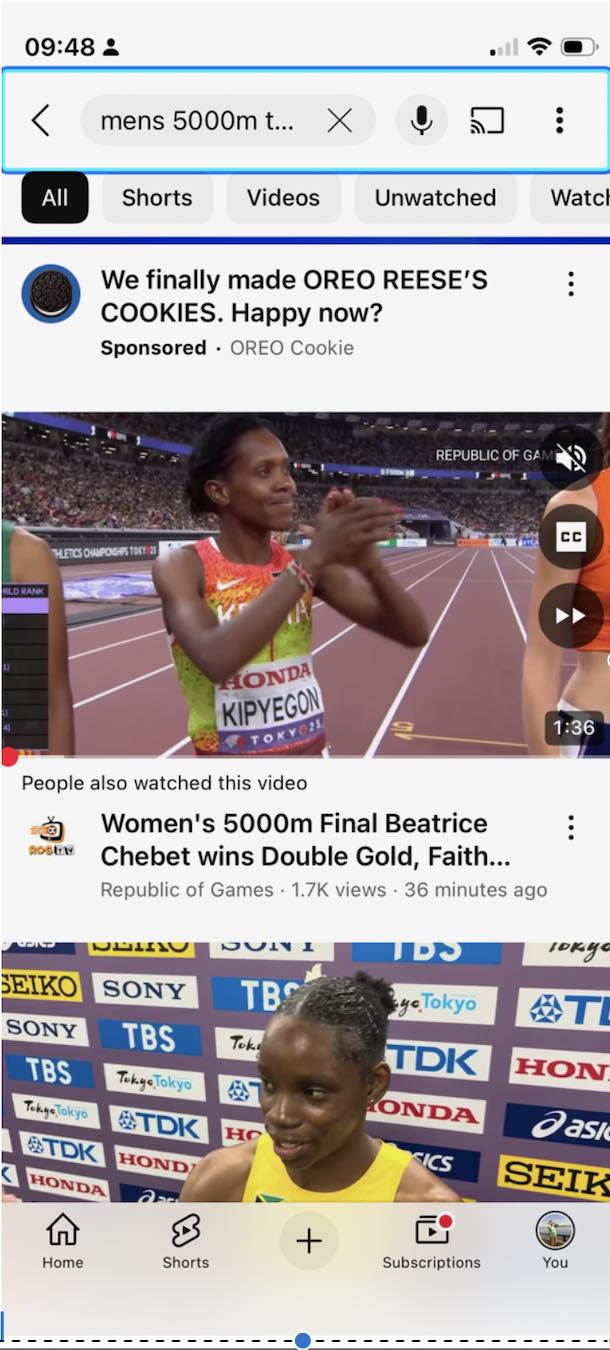
In this case, every single video had the winner in the title, whereas in the past, that would have been the case for only widely publicized events. Even worse, when I would search for an event on YouTube, I got spoilers for other events. Here’s a screen grab of my search for the men’s 5000 on YouTube:
On top of this, I often would log onto the internet, and my home page (MSN.com) would show me running results because I frequently visit running sites.
This led to a domino effect: Because I only had an immediate urgency to watch certain things before they were spoiled, I figured that watching a full replay of a previous broadcast wouldn’t work, so instead, I attempted to watch event replays, but those are nonexistent on Peacock for track events, and simply going to the Peacock page spoils things.
Now seems like a good time to talk about the dilemma and pattern of broadcasting field events.
For those in the know, the broadcaster generally condenses the field events so that nearly every throw and jump we see has a 95% chance of earning a medal. It takes out 90% of the suspense.
One thing is for sure: It’s not the complete experience. The knowledge that anything can happen is an integral part of spectator sports.
As I’m typing this two days after the events have concluded, I realized today that I have yet to see a women’s jumping event. All four women’s jumping events would total 8 hours and 24 minutes. As I’m moving on from the World Championships, I don’t know if I have the energy to watch this much. I already started to lose a little bit of interest when I started the women’s triple jump today, which I felt had the most drama going on.
But the other option at this point is to watch clips on YouTube that have been cut down so much that they’re an embarrassment.
Let’s look at the 42-second YouTube presentation of the Men’s Discus throw, which showed a single lob by the winner (I’ll be sporting enough not to reveal the name) on the World Athletics YouTube channel.
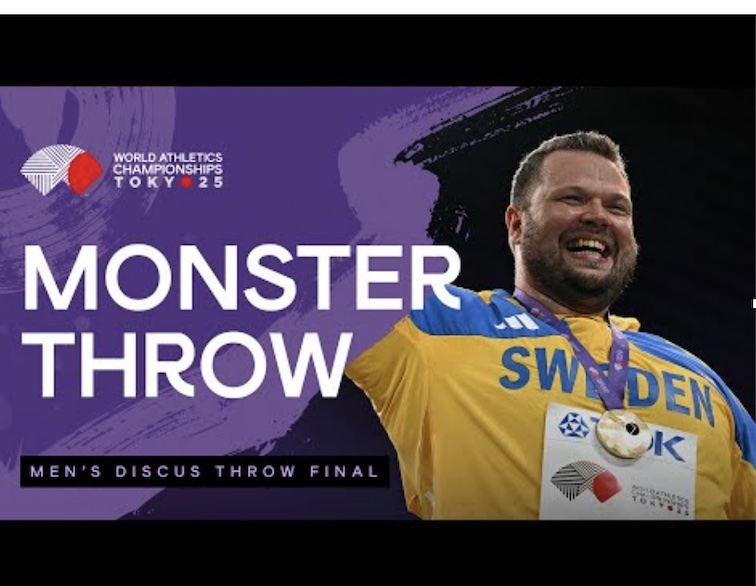
Let’s compare this to the 2019 World Championships in Doha, Qatar, in which the winner’s name wasn’t in the commentary, and a full 14 minutes of coverage was shown.
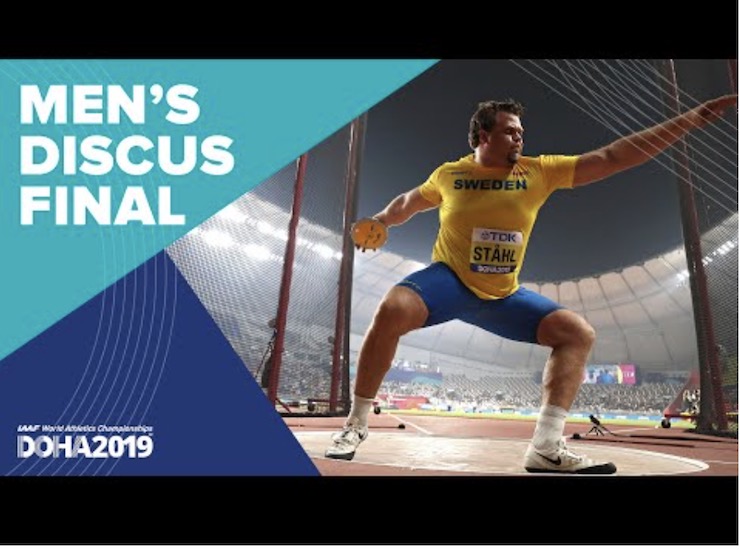
Fourteen minutes is an ideal condensation, and I give props to the World Athletics YouTube channel for eventually getting it right.
For the 2024 Olympics, the NBC Sports YouTube channel released some videos that were significantly more condensed than in the past but were still respectable. Here’s their discus video at 4:40 on the NBC Sports channel. An Olympics channel existed alongside another channel with a 2:14 condensation, featuring an admirable voice-over that evoked a World Wide of Sports feel.
Moving onto the track events year, the NBC Sports YouTube channel aired some significant Tokyo ’25 events with excellent coverage of many of the track events, but not all of them. We were largely beholden to the World Athletics channel, which committed such egregious sins as releasing a men’s 1500 video that began at the 3:05 mark into a race that was won at 3:34. And mind you, we are talking about minutes and seconds and not hours. This was not an isolated occurrence. The video for the 10,000 showed just the last 14 seconds of the race.
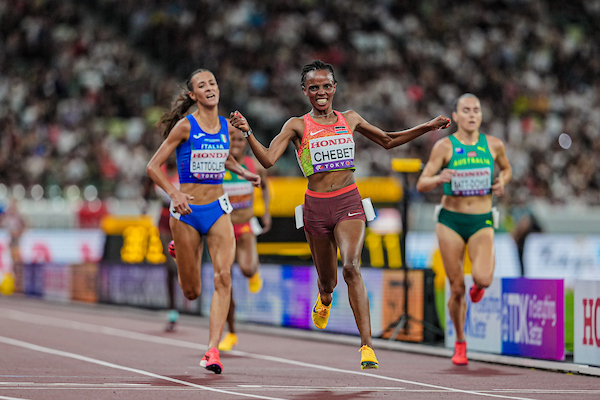
September 13, 2025, photo by World Athletics
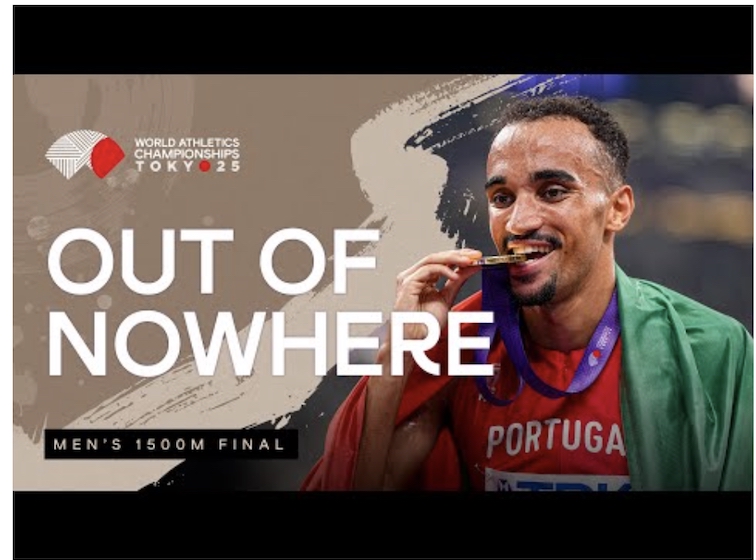
Two days later, the World Athletics channel released a video that did justice to the men’s 1500 with a decent pre-race commentary as the athletes were lining up, but how was the audience supposed to know to expect such a video?
There were a few other outlets, including a Japanese broadcast channel and media personality Everett Smulders (a 2022 graduate of Ole Miss’s distance program with a penchant for snorting into the camera —I never understood why) —who broadcast directly from the stands. In the case of the former, you often had to go through spoilers to get to them, and in the case of the latter, Smulders was too high up in the stands for you to get an ideal view.
As I learned from my reporting earlier this year, the best way to actually take in a meeting is to watch it in person. Distilling it into a bite-sized form is an imperfect art, and I respect that. Holding an event on the other side of the globe also poses difficulties, so that I can grant them leeway. However, NBC needs to understand that if the television coverage (including access to Peacock’s streaming platform) doesn’t provide sufficient options, they need to take their YouTube offerings seriously.
This means understanding who their base is: It’s people who have the attention span to follow most of these events for at least 10-15 minutes and want the whole spectator experience — no spectator in any sport wants a spoiler. No one gets anything out of a 15-second clip of a distance race or a single discus throw.