
Walt Murphy’s News and Results Service ([email protected])
This Day in Track & Field–October 16
1938—After officials used burning gasoline to dry a rain-soaked runway, Finland’s Yrjö Nikkanen, the silver medalist at the 1936 Olympics, threw the Javelin 258-2 (78.70) at his National Championships in Kotka to break his own World Record of 255-5 (77.87). https://en.wikipedia.org/wiki/Yrj%C3%B6_Nikkanen
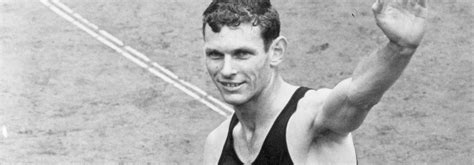
1964—New Zealand’s Peter Snell was a relative unknown when he won the 800-meters four years earlier at the Rome Olympics, but he had since become the dominant middle-distance runner in the world. So it was no surprise this time when he worked his way out of a box on the final lap, took the lead with 200-meters to go, and pulled away to successfully defend his title in Tokyo in the Olympic Record time of 1:45.1. 2nd was Canada’s Bill Crothers (1:45.6), while Kenya’s Wilson Kiprugut edged Jamaica’s George Kerr to win the bronze medal (1:45.9 for both). Americans Tom Farrell (1:46.6) and Jerry Siebert (1:47.0) finished 5-6.
Snell, who was the flag-bearer for New Zealand in the Opening Ceremony, would win his 2nd gold of the Games five days later in the 1500-meters.
Farrell, who was about to enter his senior year at St.John’s, had earlier won IC4A and NCAA titles in the spring. He would win a 2nd NCAA title in 1965 (and Olympic bronze in 1968—see below) and often served as a volunteer coach at his alma mater in recent years. His brother Peter was the long-time head women’s coach at Princeton before retiring after the 2016 season.
Rex Cawley (49.6), who had set a World Record of 49.1 at the U.S. Trials, won the gold medal in the Men’s 400-Meter hurdles over Great Britain’s John Cooper and Italy’s Salvatore Morale, both of whom ran 50.1. Former Yale star Jay Luck missed out on a potential medal when he hit the 10th hurdle and wound up in 5th place (50.5).
Wyomia Tyus (11.4 [11.49]) won the first of her two Olympic titles in the Women’s 100-Meters, with teammate Edith McGuire (11.6 [11.62]) winning the silver medal. Poland’s Ewa Kłobukowska (11.6 [11.64]) won the bronze.
Despite having knee surgery in August, Poland’s Józef Schmidt was able to recover in time to win his 2nd straight Olympic title in the Men’s Triple Jump. He took the lead for good with his 2nd-round jump of 54-7 ½ (16.65) and finished off his day by setting an Olympic Record of 55-3 ½ (16.85) on his final jump. Winning silver and bronze were the Soviet (and Russian) pair of Oleg Fedoseyev (54-4 ¾ [16.58]) and Viktor Kravchenko (54-4 ½ [16.57]). American Record holder Ira Davis, considered a potential medalist, failed to make the final.
The Soviet Union’s (and Russia’s) Yelena Gorchakova set a World Record of 204-9 (62.40) in the morning’s qualifying round of the Women’s Javelin, but finished 3rd (187-2 [57.06]) in the final behind 17-year old Mihaela Peneș (198-7 [60.54]) of Romania and Hungary’s Márta Rudas (191-2 [58.27]).
The Japanese orchestra inside the stadium had been playing shortened versions of some national anthems during the awards ceremonies. But when they ended their take on the Star Spangled Banner after an American win, two professional trumpeters in the stands, Uan Rasey and Manny Klein, both members of the Track and Field News Olympic Tour, finished the U.S. anthem as the crowd remained at attention! (From Sports Illustrated: “By Friday someone had identified the hot horn in the stands that had been applying the finishing kick to the truncated Japanese version of The Star-Spangled Banner played after each American victory. Gallantly picking up on the downbeat side of “so gal-lant-ly streaming” with his solo trumpet was Uan Rasey, the lead horn for the M-G-M studio orchestra and a globe-trotting track nut. To blow his horn, Rasey stationed himself just below the torch at National Stadium, presumably to get maximum range for “And the rockets’ red glare….” He was later joined by Bob Crosby and the Bobcats, who were appearing at a Tokyo nightclub and were equally concerned that Francis Scott Key was not being fully and internationally appreciated”)
Rasey was well known in Hollywood as a featured performer on the soundtrack of such movies as Chinatown and American in Paris.
Being the avid track fan that he was, he told MGM when they were trying to sign him to a contract, “I want to have it listed [in my contract] that I want to go to the Olympics in ’52, and I don’t want to work on Saturdays[so he could go to meets!]… If you write that down, I’ll come out…” They capitulated, and he joined the prestigious orchestra in 1949, just in time to participate in MGM’s golden age of musicals. (From Leonard Maltin’s interview—see link).
Medalists/Results: http://en.wikipedia.org/wiki/Athletics_at_the_1964_Summer_Olympics
Olympedia Reports: http://www.olympedia.org/editions/16/sports/ATH
Snell Feature(800/1500): https://www.youtube.com/watch?v=RK0woLEtQQA
Tyus Feature(1964/1968): https://www.youtube.com/watch?v=mYOlBq0dMEc
Farrell Interview(2013): http://tinyurl.com/TomFarrell2013
Uan Rasey(Leonard Maltin Interview)
Cawley: http://michtrack.org/michtrack/history-cawley-tokyo.html
1965—In a rematch of sorts between the main figures in the 1964 Olympic 10,000-meters, Morocco’s Mohammed Gammoudi, the bronze medalist in Tokyo the previous year, was a winner (14:40.6) in a tactical 5000 meters at the International Games in Mexico City over a field that included Australia’s Ron Clarke (2nd/14:41.8) and American Billy Mills(5th), the respective Olympic silver and gold medalists. (From T&F News)
1968–The Men’s 200-Meters at the Mexico City Olympics was a memorable race, with Tommie Smith, one of the greatest all-around sprinters in history, overtaking teammate John Carlos to win the gold medal and setting a World Record of 19.8 (19.83). Carlos (20.0 [20.10]), looking to his left as Smith passed him, failed to notice Australian Peter Norman (20.0 [20.06]) slipping by on his right to grab the silver medal.
But the race became a mere footnote after the two sprinters engaged in their famous raised-fist protest on the victory stand. Check the links below to learn more about the events leading up to the incident and its aftermath. Many more links can be found by Googling “Tommie Smith” “John Carlos” or “Olympic Project for Human Rights”.
Smith and Carlos, both of whom competed for San Jose State, were honored by the school when a statue commemorating their protest was unveiled in 2005. They also served as pallbearers at Peter Norman’s funeral in 2006. Norman had supported their protest by wearing an OPHR button on the victory stand.
More than 50 years after being ostracized by U.S. officials, Smith and Carlos were inducted into the U.S. Olympic Hall of Fame in 2019.
“It sends the message that maybe we had to go back in time and make some conscious decisions about whether we were right or wrong,” Carlos said, according to USA Today. “They’ve come to the conclusion that, ‘Hey man, we were wrong. We were off-base in terms of humanity relative to the human rights era.’”
https://olympics.nbcsports.com/2019/09/23/tommie-smith-john-carlos-us-olympic-hall-of-fame/
Statue: http://www.sjsu.edu/news/news_detail.jsp?id=1426
https://www.sanjose.org/attraction/olympic-black-power-statue
NY Times: http://www.nytimes.com/packages/html/sports/year_in_sports/10.16a.html
Carlos Hall of Fame Bio: https://www.usatf.org/athlete-bios/john-carlos
Silent Gesture(Smith’s Autobiography):
https://www.amazon.com/Silent-Gesture-Autobiography-Tommie-Sporting/dp/1592136400
The John Carlos Story: https://www.roamagency.com/9781608462247/
Book Review by Neil Amdur: http://tinyurl.com/AmdurReview
https://www.usatf.org/news/2021/activist-and-1968-olympic-champion-tommie-smith-th
Belated Praise(Norman)
Civil Disobedience: http://www.infoplease.com/spot/mm-mexicocity.html
A Look Back(Comments by Carlos/Norman): https://www.youtube.com/watch?v=nJ7Sk6b_2go
Carlos and Smith were the guest speakers at the dedication of the Echo Summit site as a California Historical Landmark in 2014. Read Mark Cullen’s account of the ceremony and see his autographed copy of the iconic photo of the two of them on the podium in Mexico City: http://www.trackerati.com/2014/10/
And here is a collection of great photos of the site that were taken by Joe Head at the pre-Trials meet on August 31, 1968! http://www.trackerati.com/2018/12/1968-echo-summit-color-photo-treasures.html
The 200 wasn’t the only final on this day.
American Bob Seagren, the favorite, won the Pole Vault on fewer misses over West Germany’s Claus Schiprowski and East Germany’s Wolfgang Nordwig, as all three cleared 17-8 ½ (5.40). American John Pennell cleared 17-8 ½ on his 2nd attempt, but missed out on winning the bronze medal when his pole passed under the bar, negating the jump under the rule in effect at the time (the rule was changed the following year).
It was a fierce battle for the medals in the Steeplechase. Amos Biwott (8:51.0 [8:51.02]), whose shoes never got wet as he soared over the water jump on each lap, sprinted from 4th to 1st off the final hurdle to capture the gold medal. Fellow Kenyan Benjamin Kogo (8:51.6 [8:51.56]) won silver, and American George Young (8:51.8 [8:51.86]), one of the pre-Games favorites, edged Australia’s Kerry O’Brien (8:52.0 [8:52.08]) for the bronze. It remains one of the closest finishes in the event in Olympic history.
The race marked the beginning of Kenya’s dominance in the event. Kenyans would win eleven of the thirteen Olympic gold medals from 1968 through 2016. The only times they didn’t win was in 1976 and 1980, when Kenya boycotted the Games! They swept all three medals in 1992 and 2004 and finished 1-2 in five other Games (through 2016). They won gold and bronze in Beijing (2008) and London (2012).
Kenyan-born athletes would also win the gold medal at 15 consecutive World Championships (through 2019/the streak ended in 2022). (Kenyan Stephen Cherono, running as Saif Saaeed Shaheen, represented his adopted country of Qatar when he won at the 2003 and 2005 Worlds.
France’s Colette Besson, virtually unknown before the start of the season, came from 5th to 1st in the homestretch, winning the Women’s 400-Meters over favored Lillian Board (52.1/52.12) of Great Britain. Besson’s winning time of 52.0 (52.03) equaled the Olympic Record that was set by Australia’s Betty Cuthbert in 1964, the first year the event was held for women at the Olympics. Finishing 3rd was the Soviet Union’s (and Russia’s) Natalya Pechonkina (52.2/52.25). American Jarvis Scott (52.7/52.79), the leader coming off the final turn, slipped back to 6th.
The Soviet Union’s (and Latvia’s) Jānis Lūsis won the Men’s Javelin with his final throw of 295-7 (90.10/OR). Winning the silver medal was Finland’s Jorma Kinnunen, who also saved his best for last (290-7 [88.58]), and the bronze went to Hungary’s Gergely Kulcsár, who had the lead heading into the final round (285-7[87.06}.
The medalists in the Pentathlon were West Germany’s Ingrid Becker (5098), Austria’s Liese Prokop (4966), and Hungary’s Annamária Tóth (4959).
Giving a glimpse of what would happen in the next day’s final, Italy’s Giuseppe Gentile set a World Record of
56-1 ¼ (17.10) in the qualifying round of the Triple Jump. (The WR would be altered 4 times in the final!)
Medalists/Results: http://en.wikipedia.org/wiki/Athletics_at_the_1968_Summer_Olympics
Olympedia Reports: http://www.olympedia.org/editions/17/sports/ATH
Videos
M200: https://www.youtube.com/watch?v=bWI9raEM1-4
MPV&SC(coverage begins at the 6:00 mark): https://www.youtube.com/watch?v=x6LPQSvw1m4
W400: https://www.youtube.com/watch?v=9A3ryJX4aFc
1975—16-year old Chandra Cheeseborough won the Women’s 200-meters at the Pan-American Games in Mexico City, running 22.77 to not only set a U.S. High School Record (Ribault H.S.-Jacksonville,FL), but also an American Record.
Cheeseborough would win 3 medals at the 1984 Olympics (silver in the 400, gold in both relays) and has been the coach at Tennessee State, her alma mater, since 1994.
National Hall of Fame: https://www.usatf.org/athlete-bios/chandra-cheeseborough
National H.S. Hall of Fame: http://nationalhighschooltrackandfieldhof.org/showcase/chandra-cheeseborough/
https://www.nytimes.com/2018/03/09/sports/track-and-field.html
https://tsutigers.com/sports/womens-track-and-field/roster/coaches/chandra-cheeseborough-guice/665
2022—Ethiopia’s Almaz Ayana, the 2016 Olympic Champion (and former World Record holder) at 10,000-meters, won the Amsterdam Marathon in 2:17:20, the fastest debut performance in history. Finishing 2nd in 2:18:05 was another debutant from Ethiopia, Genzeba Dibaba, the World Record holder at 1500-meters (at the time).
“I have no words for this. This is very special and I am very happy,” said Ayana. “It was very tough after my Olympic title in 2016 with injuries and pain. I am grateful for my husband, son and management for all the support.”
https://worldathletics.org/news/report/amsterdam-marathon-2022-ayana-getachew
https://www.youtube.com/watch?v=6mqoprkEcjM
Born On This Day*
Deceased*
Maxey Long 80 (1878-March 4, 1959) 1900 Olympic gold medalist—400m
5-time U.S. Champion: 100y (1900), 220y (1899), 440y (1898-1900)
1899 IC4A Champion—440y (Columbia)
Member of the National Hall of Fame
At the Paris Olympics, Long ran in the blue and white stripe of his school, Columbia, which resembled the colors of
the Racing Club de France, and the uninitiated crowd cheered Long down the home straight under the
impression that they were urging a local hero to victory. More at:
https://www.olympedia.org/athletes/78711
https://en.wikipedia.org/wiki/Maxie_Long
https://www.usatf.org/athlete-bios/maxey-long
Bill Ashenfelter—85 (1924-June 4, 2010) 1952 U.S. Olympian-Steeplechase (DNF-1st round/brother Horace won the gold
medal)
1951 U.S. X-Country Champion; 1954 U.S. Champion-Steeple
Member of the U.S. team that set a World Record of 7:29.2 in the 2-mile relay in 1952
(Ashenfelter 1:55.4, Reggie Pearman 1:50.3, John Barnes 1:52.6, Mal Whitfield 1:50.9)
Finished 8th at the 1950 NCAA X-Country Championships to lead Penn State to the team title (brother Don was
Penn State’s 6th man)
2-time Penn Relays Champion (4-Mile Relay/1949-w/Horace,1951-w/Don)
PB:9:07.1/sc (1952)
https://www.olympedia.org/athletes/78051
Obituary:
https://www.inquirer.com/philly/obituaries/20100621_Businessman__Olympian_W_N__Ashenfelter__85.html
George Kerr-Jamaica/West Indies 74 (1937-June 15, 2012) 3-time Olympian
1956-400 (2nd round), 1960-800 (bronze), 4×400 (bronze), 1964-800 (4th), 4×400 (4th)
1962 British Empire (aka Commonwealth Games) Champion-440y, 4x440y relay
2-time NCAA Champion (Illinois)-1959 (880y), 1960 (800m)
PBs: 45.7y (1960), 1:45.8y (1964)
https://www.olympedia.org/athletes/72297
https://fightingillini.com/news/2012/6/18/Illini_Great_George_Kerr_Passes_Away
https://thecaribbeancamera.com/remembering-george-kerr-one-of-jamaicas-great-sprinters/
The first Jamaican recognized with the raising of the flag
https://theolympians.co/tag/george-kerr/