
Part II:
Noted track and field journalist Liam Boylan-Pett wrote a great article on the beauty of the opening seconds of a cross-country race mass start. However, this is from the perspective of a TV spectator.
It’s not particularly easy to find the right spot when you’re literally at the course and if you go down too far past the start, you might have too long a hike back to the next mark. So when the gun went off for the men’s race, I opted to interview 4th place women’s finisher Silvia Jelelgo of Clemson instead. I figured the teams aren’t going to hang around at Panorama Farms forever so I had to make the most of this two hour window while the races were going on to get interviews and photos in.
The race’s commentary was done over the loudspeaker by Ian Brooks, with his stately British accent, and Daniel Cutright. They were bought in by UVA to provide a certain expertise to the meet which was a good investment to the spectator experience. It is often the case that athletic department communication staff might not be track nuts and might have limited knowledge outside their own teams.
With all the action happening and each kilometer passing by, this race feels like it’s happening at warp speed. I don’t know what it feels like to run a 10k in under 30 minutes, but when I ran a 10k, it felt like time moved five times as slowly. Note to any psychological department out there: This could make for a good scientific study.
Christopher Knight of Furman has a small lead at the first split (2K) over George Coultie of Virginia Tech and Gary Martin of UVA. It surprised me to look at the board and see that this gap was just a fifth of a second. Again, it’s sort of a warp speed effect.
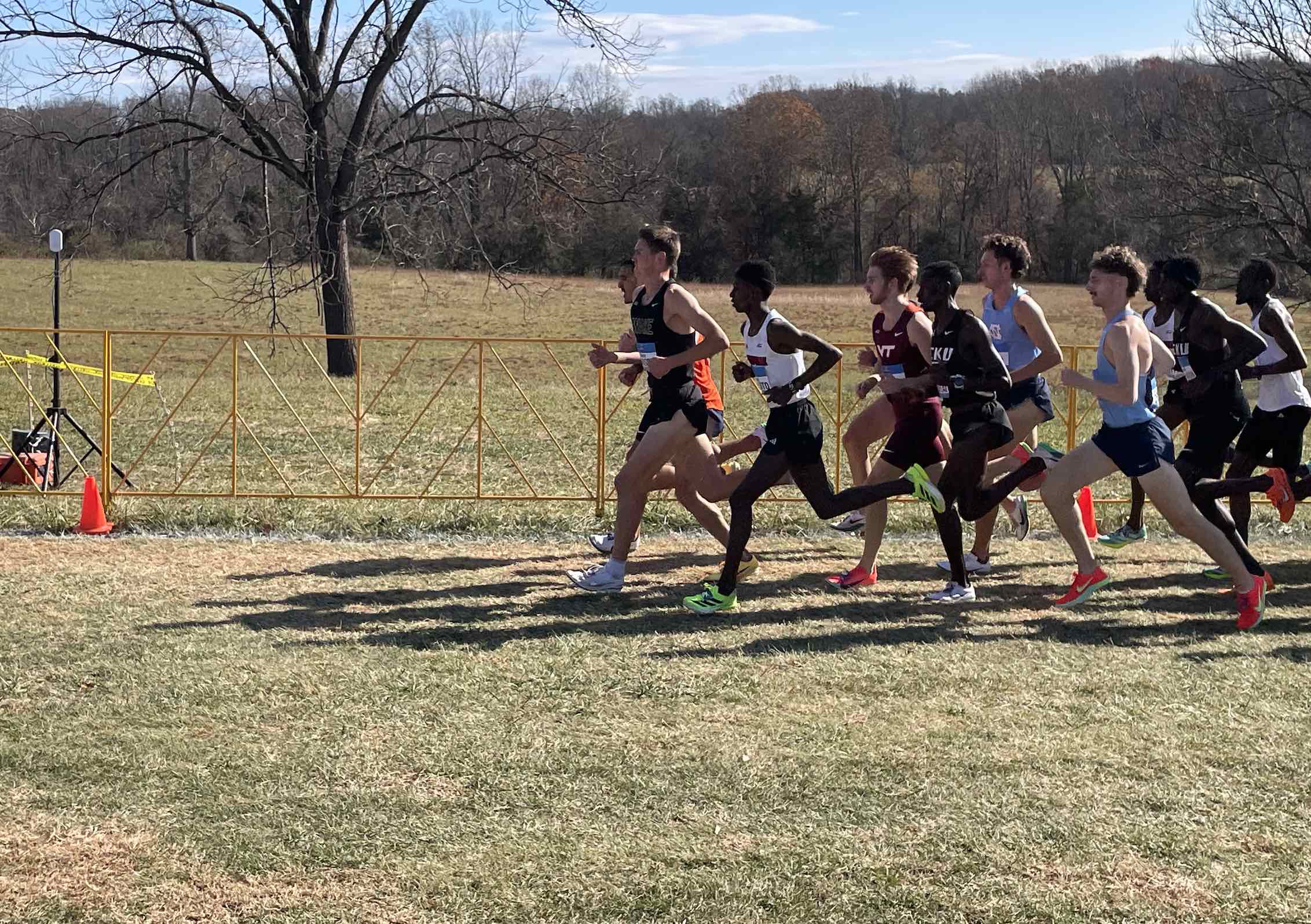
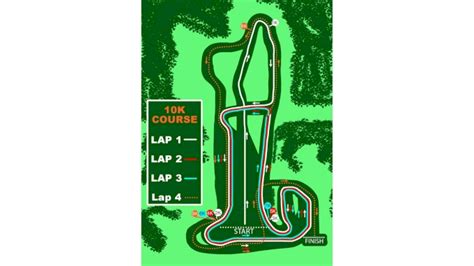
As anyone who’s seen a large race knows, it’s very rare for a race to break open early, so I had a good 7K before the pack separated. The first 70% of the race gave me opportunities to line up interviews and try to capture the perfect picture at the two primary mats (courtesy of Flash Results). Again, it’s possible the course is so popular because 7 of the 9 intermediate checkpoints in a 10K race are taking place at just two spots which makes it very easy to be a spectator
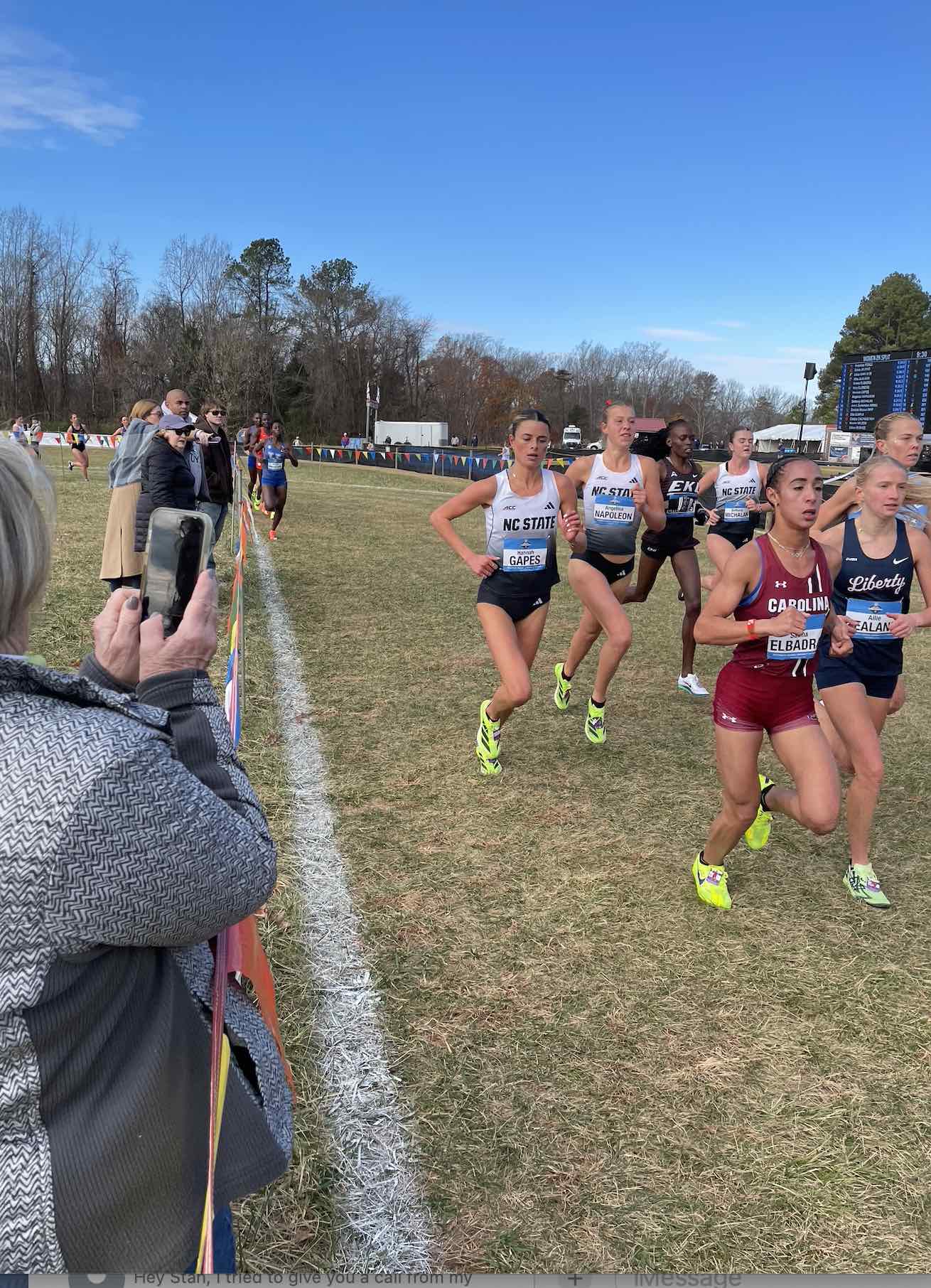
It was also heartening to see such a great scene of spectators including the female runners who finished their races and still had the energy to run around to cheer on their male teammates.
I predicted the results to this race would be Rocky Hansen, Elsingi Kipruto, Gary Martin, and the top two runners from Eastern Kentucky in the top 5 (Taha El Raouy and Justine Kipkoech), followed by George Coultie, and the two top runners from Kentucky, Colton Sands of UNC, and a Virginia runner rounding out the last four slots of the top ten in some form (Bird and Kipngock).
My predictions weren’t too far off though I didn’t foresee Eastern Kentucky having such a strong run jostling for the lead. The Moroccon El Raoy placed third, a different runner who I hadn’t previously heard of, Brian Kimutai (my apologies for not knowing of your existence before this race, Bruan), placed 6th, and the Colonels placed 6 in the top 27. For all the hype about how deep UVA’s team was, the Colonels placed 6 guys in front of Virginia’s 4th runner. On top of that, I later heard that my pick Justine Kipkoech was recovering from an injury and was expected to peak next week.
As you probably have heard by now, Rocky Hansen won the race free and clear of the field, and his team also won the title.
I interviewed Hansen last Spring after he finished third in the 5K at indoors NCAAs, because I was proud of him for his third place finish. I’ve come to see underclassmen placing well at NCAA nationals to be the hardest barrier to overcome. It seems that regardless of state/country of origin or competitiveness of conference, everyone has a chance, but the number of All-Americans who are freshmen or even sophomores is miniscule. So, yes, I believe this is the new glass ceiling and Rocky broke it as I believe the only sophomore male last year to place in a longer distance event. [Edit: I looked this up and and I believe Charlie Sprott of Wake Forest placed in cross-country, Simeon Birnbaum placed in the 1500. Benjamin Balazs might have be a redshirt sophomore when he placed in cross-country, and Tinoda Matsatsa placed in the 800, and that doesn’t count other years. But whatever, my point is that Hansen finished 3rd in an extremely competitive field with a 13:13 as a sophomore, that’s something!]
I noticed a definite change in confidence in Hansen when I interviewed him again yesterday. I’m not suggesting he was a timid wallflower back in March, but he worked the crowds and the interviews with a self-assurance of a superhero who had just saved someone from a burning building. I have to think this bodes well for next week.
I also spoke with the three all-regional women from University of Virginia and they spoke of nerves about waiting to hear if they’ve been selected for nationals. Fortunately, this is different than Selection Sunday with NCAA basketball, because I believe (I might be wrong, so take this with a grain of salt) if you are armed with a calculator and knowledge of the system, you can figure it out before the announcement.
On the men’s side, it was refreshing to know that this was a happy ending for everyone. Because this region did so well on KOLAS points, it was comforting to know that everyone did . No less than six teams made it to Nationals on Kolas points and the two runners from Kentucky I predicted to make the top 10.
One of my last interviews was with English junior Edward Byrd of Kentucky who was such a gracious guy that he overlooked that I called him Evan throughout the interview (my apologies). I told him that he got my attention last year when he beat Stanford’s top guns at last year’s Gans Creek Invitational, and he explained that he had just ran the U20 championships in Europe right before that race so he peaked on a different schedule. He currently has a 13:33 PR for the 5K and his goal is to bring it down to 13:25 so he could qualify for the Commonwealth Games trials. It seems the reason he hasn’t yet hit All-American, is his efforts to be internationally competitive might not be on the same calendar as NCAAs.
I should also note here that if I do follow any one region it tends to be this one as I am an alum of two of these schools and know people who ran in two or three others. I tend to delight in the fact that Kentucky is in this region, because as someone whose spent pretty much his whole life in different parts of Virginia (seven different cities to be exact), I can tell you that the Carolinas and Virginia are pretty interconnected in terms of diffusion of people while Kentucky is considered somewhat exotic.
At the same time, it should be noted that the cross-country teams of these squads are exotic in a different way than I’m referring to: I spoke with two parents, for Eastern Kentucky, whose son is the only American on the men’s top seven today. The team has people from Spain, Morocco, Kenya, England, Portugal, and New Zealand.
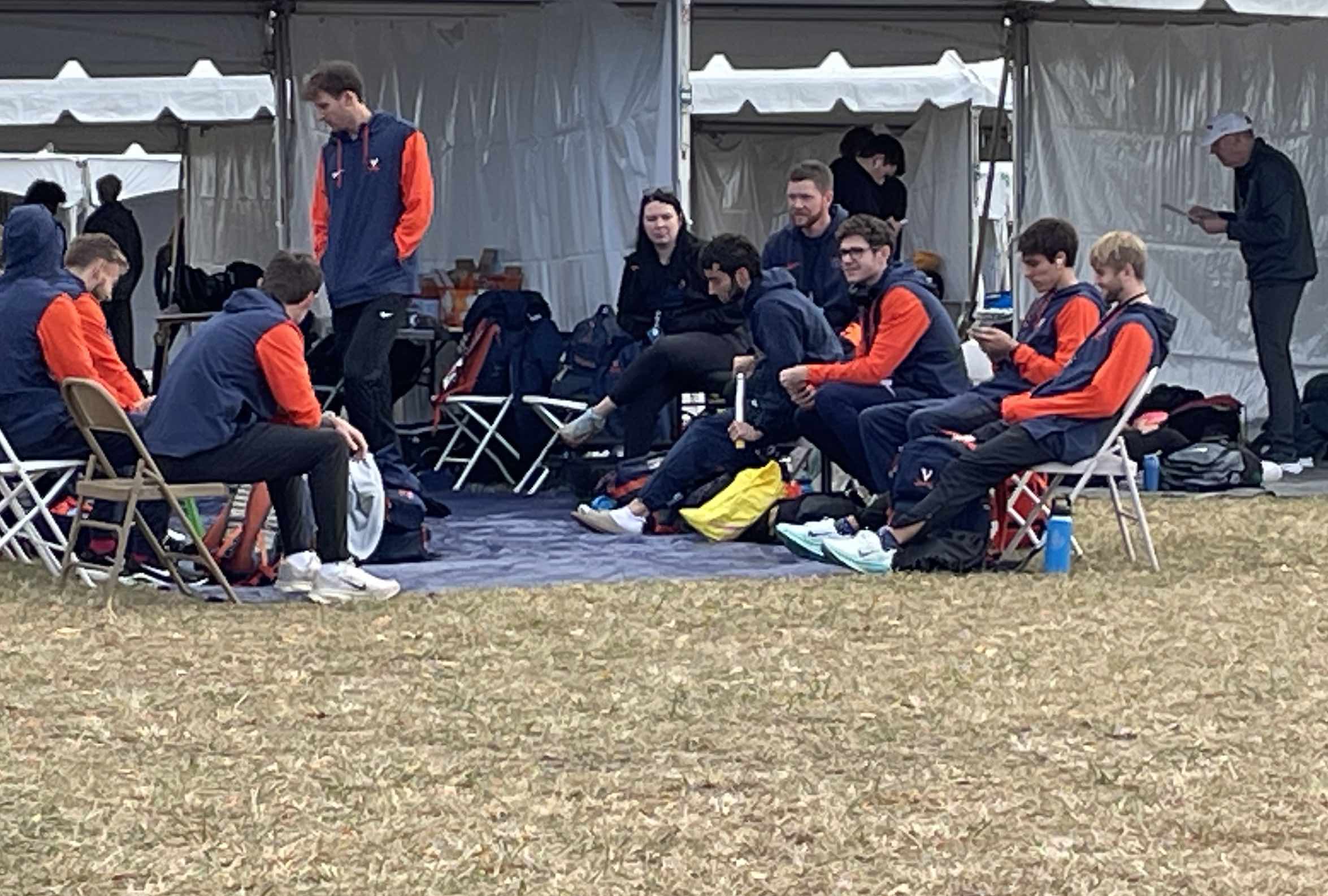
Edward Byrd went to Kentucky because he didn’t see that the English universities have anywhere near the competitiveness or the facilities as what is offered here. Between Byrd and George Coultie of Virginia Tech (also an Englishman), I’m finding Brits to be excellent interview subjects but I already knew that.
At the start of this year, I hadn’t been to a track meet in person in something like 15 years. I tried coaching for a few weeks after I graduated college and that was it. Since then, I’ve been to three meets in 2025 courtesy of RunBlogRun: Indoor NCAAs in Virginia Beach, the Penn Relays in Philadelphia, and the Division I Southeast Regional Cross-Country meet.
I was told by colleagues in the media tent that runners are the most approachable and friendly athletes around when I arrived. This has been true from the collegiate athletes that didn’t have good days to the high school coaches, to the Olympians. I bumped into NCAA 800 champion Makayla Paige and she remembered me from over half a year ago, and she was very gracious in an interview in which I stumbled through the first time (unfortunately, the video on this one has been corrupted so there’s no chance). Speaking of people with that name, my very first media interview this year was with the LSU Distance Medley Relay squad and Michaela Rose (fourth in the nation) was as gracious as ever when I confessed this is my first interview of the day.
Is this the primary reason to go to a cross-country race if you’re not into this sport? Not necessarily, but it’s a nice perk to see such a positive community.