
Report from the Southeast Region Championships, Part I
I woke up at my Charlottesville Air BnB thankful that as someone who’s not a morning person the women’s race wouldn’t start until 10 and the men’s race wouldn’t start at 11.
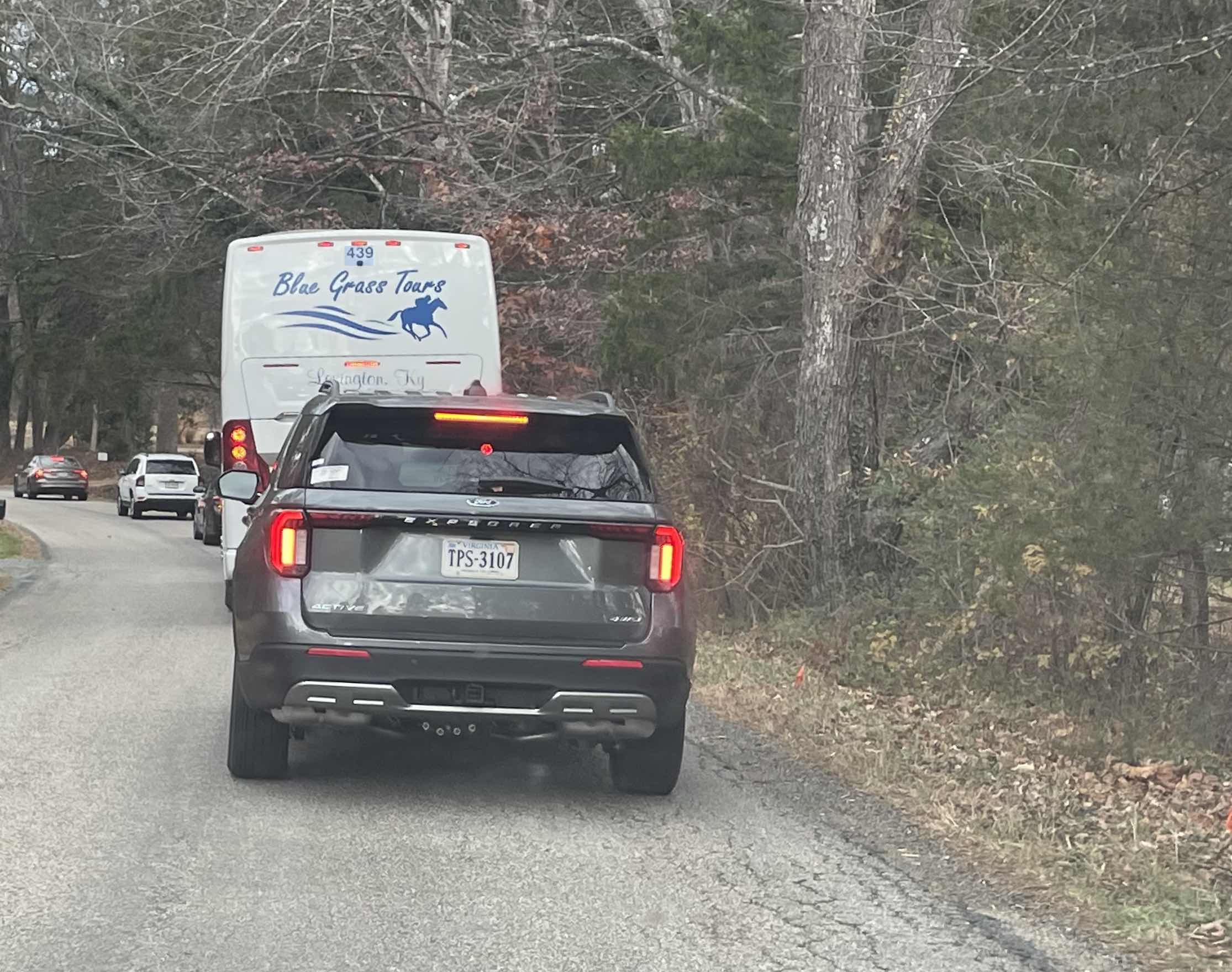
Still I cut it a little closer than expected and when I hit bumper-to-bumper traffic on a one-lane road with a mile and 35 minutes to go, I started to get a little worried. It also tickled me a little to know that what I figured to be the University of Kentucky team bus (I later confirmed this to be true but it was the men’s team only) was two cars in front of me.
Fortunately, the log jam cleared up and I had a chance to view the legendary Panorama farms.
As someone who had attended three colleges in Virginia for undergraduate and graduate school, and had friends on other Virginia squads, I had heard a lot about this course. Panorama Farms hosts over 10 races a year (this Fall, it’s hosting 12) and while they don’t have much of a course in the way of waterways, forests, or hills, it’s incredibly spectator friendly and can be engineered like a reconstructible lego set to fit every distance: It’s very easy to transition from a 5K race to a 6K, 8K, or 10K race.
Still, you quickly learn as a spectator how hard it is to be every place at once. From the moment the gun went off at 10 to maybe the 6 or 7K mark of the guy’s race, my head was a frantic whirlwind and I didn’t really have time to fully appreciate the race. In part, I thrive on this as a journalist: I enjoy the process of being in a chaotic scene and trying to collect as much information as I can.
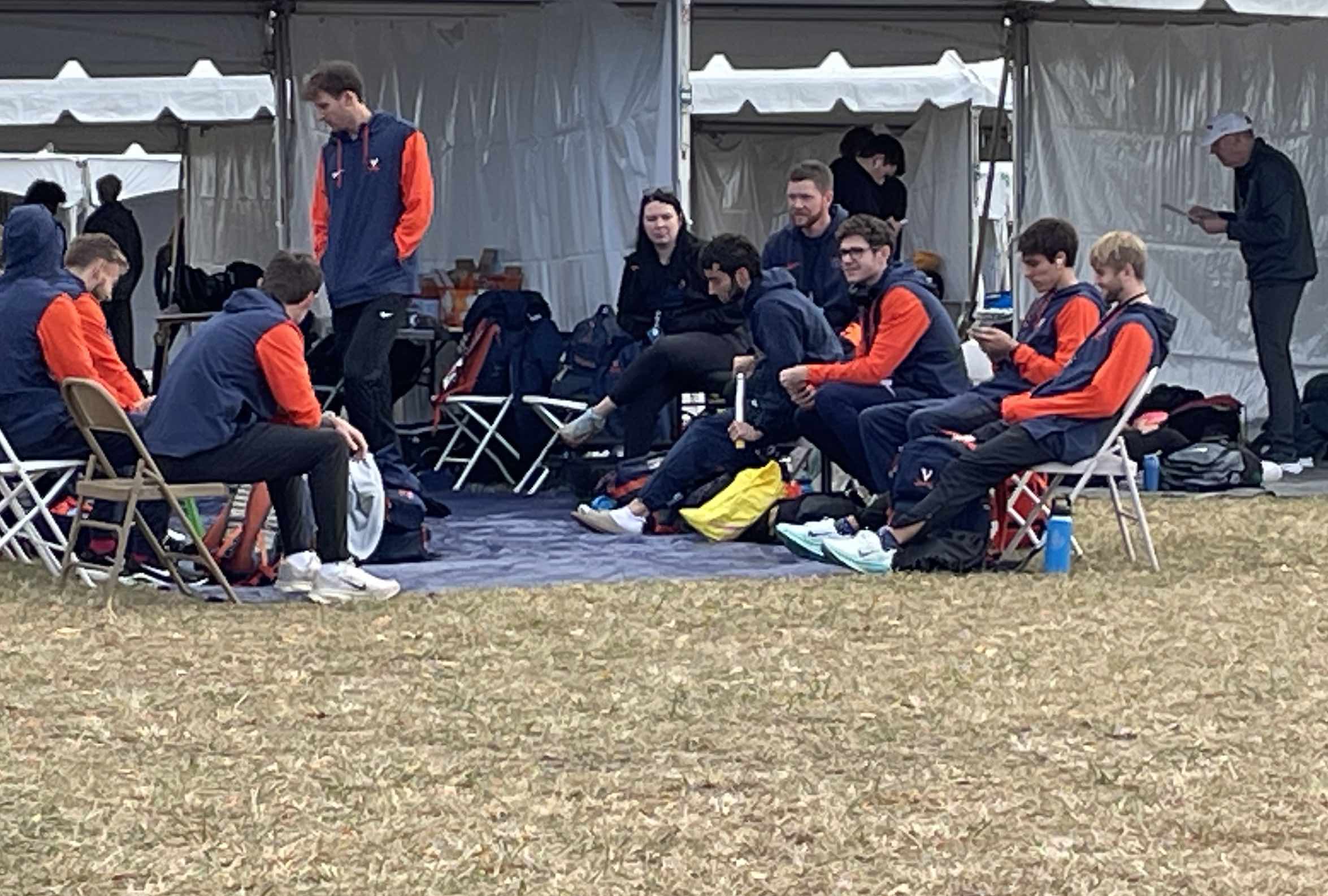
At the same time, this was also a day to learn how it feels to be a bevy of other types of participants: The members of the coaching staff, the non-top-seven team members whose job it is to root for their teammates, the parents. For a story too long to explain, I’m very close to a young teenager and I attended her cross-country race and I remember running faster than I have all year trying to get a photo of her at the finish line once I was done cheering her on at the 2.7 mile mark. There are heroic parents, siblings, and teammates who go that extra mile and be parts of those cheering sections.
I left the day, however, feeling the most admiration for the people who attended the race as pure spectators. There were tons of locals who are aware of Panorama Farms and view attending a race here like the aristocrats did with the horse races in My Fair Lady. Jessie Sewell is here with his two kids in tow and says, “he just wants to inspire the next generation.”
John and Barbara Kessler are locals who had a cousin run for the Colorado Buffaloes a while ago and when they went to watch his race at a family reunion, they fell in love with the sport from a spectator perspective.
“It’s a beautiful venue and an exciting sport,” says Barbara.
After talking to the Kesslers, I watch the women’s finish and while I know some of the big names like North Carolina State’s Angela Napoleon (a surprise World Championships qualifier); UNC’s Vera Sjoberg (who was an all-American last year for Boston College before transferring to UNC); NC State’s Grace Hartman and Sadie Engelhart; and Angelina Perez of Wake Forest, I was pretty shocked to see Salma Elbadra of South Carolina win the race. This is a course that hosted the national championships and she ran the second fastest 6K in Panorama Farms history. Not only that but South Carolina upset UNC to take second place today and qualify for Nationals automatically. This was the first berth the school has earned in program history.
I spoke with Coach Brock Moreaux of South Carolina. He’s young enough to be irrecognizable from the male runners, but he talks with a lot of confidence and he obviously knows what he’s doing. Pretty much every person who finished higher than expected that I’ve interviewed for these assignments with RunBlogRun has expressed confidence beforehand that they’d pull off an upset. It probably comes with the territory of dedicating that many miles to being that good.
In addition to the Moroccon runner Elbadra, the squad consisted of an Algerian (Abir Reffas, 18th), a Kenyan (Teresa Cherotich, 22nd), a French runner (Jade Buridon, 61s), two South Carolina recruits (Anya Arroyo, 21st; Abigail White, 38th), and Kentucky recruit Cate Conklin (31st). This is one of many programs that relies on a wonderful international mix of talent while still holding a base in the program’s home state.
I also have to confess I didn’t even know the University of South Carolina had a cross-country team. I know they had a miler Anass Essayi a couple years back who became a 1500 Olympic finalist for Morocco, but I remember that he wasn’t eligible for track. Apparently, South Carolina has cross-country for women’s only which isn’t that uncommon due to Title IX restrictions (something one of my alma matas JMU fought around 2006).
In fact, there were a lot of schools I’d never heard of like Northern Kentucky (although considering there was an Eastern Kentucky, this didn’t seem that illogical), USC Upstate, Bellarmine, Murray State, and Queens College.
I spoke with freshman Dennis Devine of Queens College who told me that the school moved up from DII in 2022. I asked him whether he’d rather have been a big fish in a small pond or a small fish in a big pond, and he responded that he liked better competition.
It’s incredible to also think of how many schools that are here with no chance of making a mark with 36 men’s teams and 33 women’s teams. I passed by UNC-Charlotte and they were having the time of their lives despite not being in contention anywhere. As my coach told us when we started high school cross-country, it’s also a sport about individual goals and completion and I got that sense when I was talking to some of these runners.
Up next, I’ll take you through my experiences with the men’s race. Stay tuned!