

World Relays: Ingenious Idea or Forced Competition?
The World Athletics Relays have always carried one of the most fascinating ideas in the sport. Track and field is usually built around the individual, around the one athlete who can run faster, jump higher, throw farther, or carry a nation’s hope alone. The relays ask a different question. They ask which country can organize speed, trust, timing, chemistry, and national depth into one clean race.
That is why the Debswana World Athletics Relays Gaborone 26 feels like an event with real promise. Six relay events will be contested in Gaborone: the women’s and men’s 4x100m, the women’s and men’s 4x400m, the mixed 4x100m, and the mixed 4x400m. The mixed 4x100m is especially intriguing because it made its global debut at the last World Relays in Guangzhou in 2025 and returns in Gaborone as one of the newer experiments World Athletics is trying to build into something memorable.
The qualification stakes make Gaborone more than a two-day relay showcase. Teams are competing for places at the World Athletics Ultimate Championship in Budapest later this year and the World Athletics Championships Beijing 27. The top six teams in the mixed 4x100m and mixed 4x400m will qualify for Budapest, and 12 teams in each of the six events will qualify for Beijing. Prize money also adds another layer, with the winners in each event receiving US $40,000 and the top eight teams earning money.
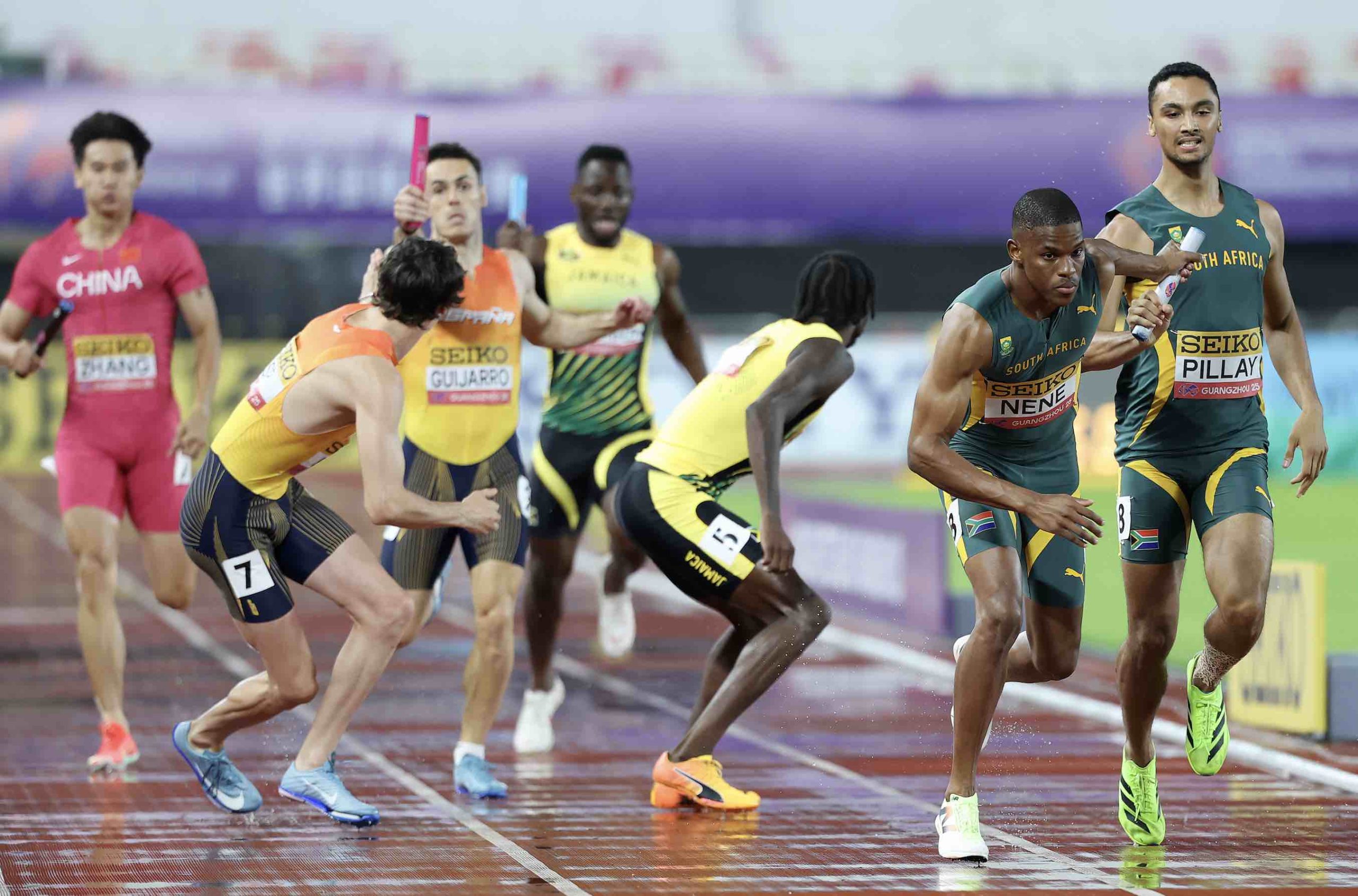
That gives the World Relays a strong sporting purpose because relay qualification has become too important to leave until the final months before a major championship. A country can have world-class sprinters and still miss the global stage if it lacks a functioning relay culture. That is the beauty and the brutality of this event. The baton does not care about reputation. It punishes panic, loose exchanges, poor order selection, and federations that treat relays like an afterthought.
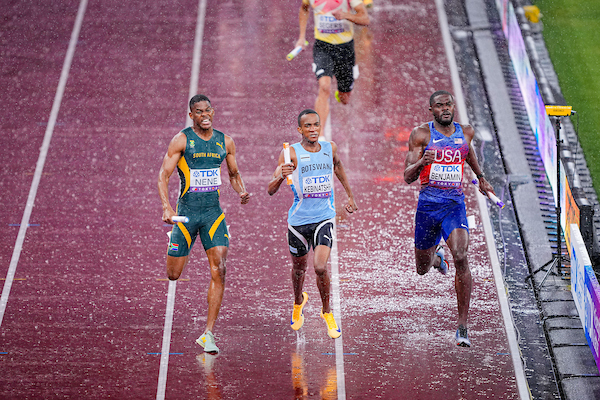
Gaborone also has the kind of host-nation story that can lift an event. Botswana is no longer simply welcoming the world. It has become one of the countries everyone wants to watch. Letsile Tebogo is entered for the 4x100m, and Collen Kebinatshipi is part of the 4x400m group, giving the home crowd real medal and qualification hopes in front of them. Botswana’s men’s 4x400m team has grown into one of the great symbols of the country’s sporting rise, and hosting a relay championship at this moment gives the event a sense of occasion that cannot be manufactured.
The hard question is whether the World Relays has fully convinced the sport’s biggest names that it belongs in their season. The entry lists are strong, with World Athletics announcing 723 athletes from 40 nations, yet some of the most recognizable stars in global sprinting will be missing. For Team USA, Noah Lyles is absent from the men’s 4x100m picture, and World Athletics’ own preview notes that the American team is missing Olympic champion Lyles and world indoor champion Jordan Anthony. Christian Coleman and Fred Kerley are also not the central names driving the U.S. men’s relay story in Gaborone, which naturally affects how fans read the strength of the field.
Jamaica’s men also arrive with major absences. Oblique Seville, the reigning world 100m champion, and Kishane Thompson, the World Championships silver medallist, are among the notable names missing from the Jamaican squad, along with 400m runners Roshawn Clarke and Tajh-Marques White. That is a significant blow because Jamaica’s relay identity is built on the emotional weight of its sprint history, and a men’s 4x100m without Seville and Thompson loses a piece of the headline power that would have made it feel like a full-strength global confrontation.
The women’s side has the same prestige problem. Sha’Carri Richardson is missing from the U.S. roster, along with other major American names such as Sydney McLaughlin-Levrone and Gabby Thomas, according to reports around the entry lists. Elaine Thompson-Herah’s return for Jamaica gives the meet a huge storyline, especially after her long injury recovery, yet the wider pattern remains clear: the World Relays still struggles to get every top star to treat it as compulsory.
That is where the event sits right now, somewhere between smart innovation and a competition still searching for full prestige. It has a clean concept, meaningful qualification stakes, real prize money, a fresh mixed 4x100m product, and a host nation with genuine emotional pull. It also has an image problem because casual fans judge big meets by the names they recognize first, and too many of the biggest sprint names are missing, making the World Relays feel like the complete global summit it wants to become.














Are u kidding brother?mentioning names of people who are not even able to compete even if they took it seriously, like Fred Kerly ? Anyone even remotely folloing t&f knows Kerly is suspended and doing enhanced games so why do u mention him as if he could have been here if he took relays seriously! Sydney is pregnant! How can u even mention her. Have u even been following t&f this season. U should have rather mentioned Melissa & TeeTee
You need to read a bit more carefully before you let your anger show. Fred Kerley was mentioned around the fact that he was not , like the
others, competing. I let my writers write their beliefs, hoping to correct the errors. Fred is not competing, and yes, Fred was suspsended. The idea
was that there are few with the experience of that squad compting in The World Relays. Thanks for reading some of the article.